Why is my cat peeing outside the litter box?
Check these signs first
- Red flag: Go to the vet right away if your cat3 signs
- Yellow flag: Make an appointment within 24 to 48 hours if5 signs
- Green flag: What you can do at home
- Typical cost
- $57-$130
- Reading time
- 5 min
- Sources
- 7
- Updated
A cat that pees outside the litter box isn't doing it out of spite. Usually there's a medical problem (such as cystitis), something about the litter box they don't like, or stress. First, rule out an emergency: if your cat keeps going to the box and nothing comes out, or only a few drops, especially in a male cat, go to the vet now. A urinary blockage can be fatal within 24 to 48 hours.
First, rule out an emergency
Go to the vet right away if your cat:
- Goes in and out of the litter box many times, strains and passes no urine or only a few drops. This is most common in male cats.
- Cries or meows while trying to pee, or keeps licking the genital area.
- Is also vomiting, lethargic, hiding or not eating.
Make an appointment within 24 to 48 hours if:
- Your cat pees often in small amounts, or you see blood in the urine, even if they seem fine.
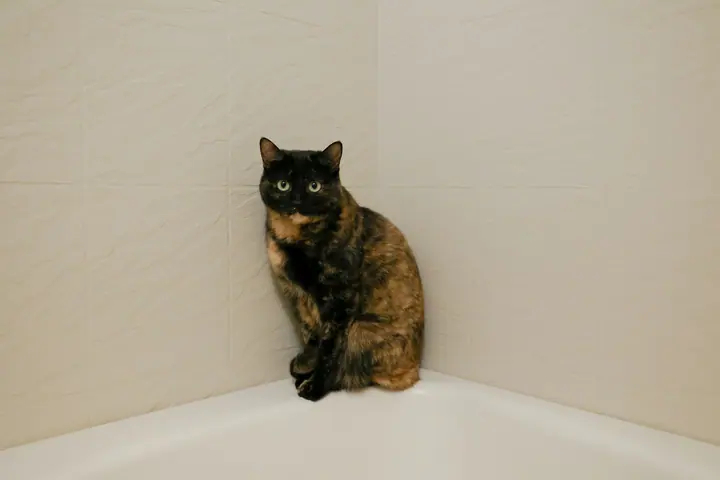
- They pee on smooth, cool surfaces such as the bathtub, sink or kitchen floor.
- They're drinking and peeing more than before. See cat drinking a lot of water.
- They're a senior cat and it started suddenly.
- It's been going on for a few days, even if you think the box is the reason.
The ASPCA advises that any cat going outside the box should be checked by a vet before you assume it's a behavior problem (ASPCA).
Medical causes
- Feline idiopathic cystitis. It's the most common diagnosis in cats with urinary signs. It's linked to stress, being overweight, not getting enough exercise, living indoors and not drinking enough water (Cornell Feline Health Center).
- Urinary tract infection. More common in older cats and in females.
- Bladder stones or crystal plugs, which can block the urethra, especially in males.
- Diseases that make cats pee more: kidney disease, diabetes or hyperthyroidism.
- Arthritis. An older cat in pain may struggle to climb into a high-sided box.
When peeing hurts, a cat can link the pain to the litter box and start avoiding it. That's why, even once the medical problem is treated, some cats need help getting back to the box.
Litter box problems
Cats are picky about their bathroom. According to International Cat Care, most cats do best with (iCatCare):
| What to check | What most cats prefer |
|---|---|
| Number | One box per cat, plus one, in different parts of the home |
| Cleaning | Scoop at least twice a day; empty and wash the box every 2-4 weeks with clumping litter (weekly with non-clumping) |
| Location | A quiet corner, away from food and water, cat flaps, glass doors and busy hallways |
| Litter | Fine, clumping and unscented, about 1 to 1.5 inches deep |
| Size | At least one and a half times your cat's length from nose to base of tail |
| Cover | Many cats prefer open boxes; covered boxes trap odors |
Sudden litter changes, strong-smelling cleaners and air fresheners, plastic liners or a noisy washing machine next to the box can also put a cat off.
Stress and spraying
Stress is the most common behavioral cause: moving, renovations, a new baby, a dog, another cat in the home, or outdoor cats they can see through the window. In multi-cat homes, one cat may block another's access to the box without you noticing.
Peeing outside the box is different from spraying. When a cat sprays, they back up to a vertical surface (a wall, curtain or door) with their tail raised and quivering, and release a small squirt. When a cat pees outside the box, they squat and leave a puddle on a flat surface. Spraying is more common in males and in cats that aren't spayed or neutered, and drops a lot after neutering (iCatCare). See how much it costs to spay or neuter a cat.
What you can do at home
Once your vet has ruled out a medical problem, or while you wait for the appointment if your cat is peeing normally:
- Check the litter box against the table above. What helps most is usually adding a box, scooping more often and using fine, unscented litter.
- Clean soiled spots thoroughly with an enzymatic cleaner or a 10% solution of biological (enzyme) laundry detergent, then rinse with cold water. Avoid ammonia-based cleaners: they smell like urine and invite your cat back (iCatCare).
- Put a litter box where your cat has been peeing, if you can, then move it gradually to where you want it.
- Never punish your cat or rub their nose in it. It only makes them afraid and the problem worse.
- Lower stress: keep routines steady, provide hiding spots and high perches, play every day and, with several cats, give them separate food, water and litter boxes.
- Help them drink more: several water bowls away from food, a water fountain and some wet food all help prevent cystitis.
What the vet will do
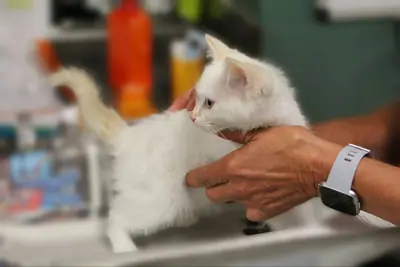
Your vet will examine your cat and feel the bladder. They'll usually run a urinalysis to look for blood, crystals or infection and, depending on age, bloodwork to check the kidneys, thyroid and blood sugar. If they suspect stones, they'll take X-rays or do an ultrasound. As a guide, an exam costs about $57-$130 and a urinalysis about $54 in the US (Synchrony/CareCredit cost study).
A blocked cat needs sedation, a urinary catheter and several days in the hospital. Idiopathic cystitis is treated with pain relief, more water in the diet (often wet food or a urinary diet) and less stress. Antibiotics are only used if there's an infection.
Frequently asked questions
Is my cat peeing outside the litter box out of spite?
No. Feline veterinary guidelines stress that cats don't do it out of spite or anger, but because some physical, social or medical need isn't being met (AAFP/ISFM).
What litter is best to get a cat to use the box?
Most cats prefer a fine, sand-like, clumping and unscented litter. If you want to switch litters, do it gradually by mixing the new one with the old.
Will neutering stop my cat from spraying?
In most cats it greatly reduces spraying, but not always completely: about 10% of neutered males and 5% of spayed females still spray, especially in multi-cat homes (iCatCare).
Sources
- Medical Causes of House Soiling in Cats (ASPCA)
- Feline Lower Urinary Tract Disease (Cornell Feline Health Center)
- Soiling indoors (International Cat Care)
- Choosing a litter tray for your cat (International Cat Care)
- Urine spraying in cats (International Cat Care)
- Guidelines for Diagnosing and Solving House-Soiling Behavior in Cats (AAFP/ISFM)
- Veterinary Exam and Procedure Costs (CareCredit, Synchrony 2025-2026 cost study)
This article is for general information and does not replace diagnosis or treatment by a veterinarian. If you are worried about your pet's health, call your vet clinic.