Why does my cat have eye discharge?
Check these signs first
- Red flag: Go to the vet today if your cat5 signs
- Yellow flag: Make an appointment in the next few days if3 signs
- Green flag: What you can do at home in the meantime
- Typical cost
- $57-$130
- Reading time
- 4 min
- Sources
- 4
- Updated
A little clear crust in the corner of the eye after a nap is normal. But if your cat has frequent discharge that's yellow, green or brown, a red or swollen eye, or is squinting, the most likely cause is conjunctivitis. According to the Cornell Feline Health Center, it's the most common eye problem in cats, and it's often caused by feline herpesvirus. Many mild cases clear up on their own, but it's worth having your vet rule out something more serious. If your cat holds the eye shut, the eye looks cloudy or there's an injury, go today.
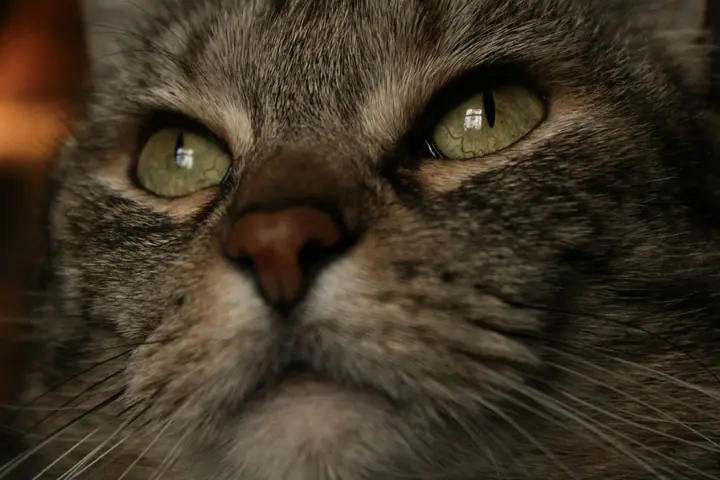
What causes eye discharge in cats
- Infections. The most frequent causes are feline herpesvirus, calicivirus and the bacteria Chlamydophila and Mycoplasma, according to Cornell. Herpesvirus, which the Merck Veterinary Manual describes as widespread among cats, can stay in the body and flare up again from time to time, much like cold sores in people. It often comes with sneezing: see cat sneezing a lot.
- Irritants: dust, smoke or chemicals in the air.
- Allergies, for example to certain plants.
- Something in the eye, like a seed or a bit of fluff, especially if only one eye is affected.
- Tear duct problems or dry eye, also more typical of one eye.
According to the Merck Manual, when only one eye is affected, think of a foreign body, the tear duct or dry eye; when both eyes are affected, or it spreads from one to the other, it's usually a virus or bacteria.
Conjunctivitis is most common in young cats and in multi-cat homes, where it spreads during play. It's also relatively common in cats with FIV or feline leukemia (FeLV).
Signs of conjunctivitis
- Discharge that's watery and clear, or thick and dark, depending on the cause.
- A red eye with swollen tissue around it; the third eyelid often shows.
- Squinting and frequent blinking.
- One or both eyes affected.
When to see the vet
Go to the vet today if your cat:
- Holds the eye closed or squints hard.
- Has a cloudy or bulging eye, or one eye looks different from the other.
- Has a cut, scratch or injury to the eye or eyelid.
- Has discharge and is also lethargic, not eating or feverish.
- Is a kitten with thick discharge or eyes stuck shut.
VCA lists squinting or holding the eyes closed, cloudy eyes and sudden bulging among the eye signs that need prompt care (VCA). The Merck Manual warns that some problems of the conjunctiva can cause blindness if untreated. And a cat shouldn't go more than 24 hours without eating.
Make an appointment in the next few days if:
- The discharge is yellow, green or brown, or doesn't clear in a day or two.
- The eye is red or swollen, or there's crusting on the eyelids.
- The discharge keeps coming back.
What you can do at home in the meantime
- Wipe away discharge with gauze dampened with warm water, from the inside corner outward, using a fresh piece for each eye.
- Wash your hands before and after, especially if you have other cats.
- Don't use human eye drops or leftover medication unless your vet says so.
- If you have several cats, keep bowls and bedding separate while symptoms last.
What the vet will do
Your vet will examine the eyes with a light and, according to the Merck Manual, may do a tear test (Schirmer test) or take a sample from the conjunctiva. According to Cornell, vets often prescribe antibiotic eye drops or ointment three or four times a day for two to three weeks, plus an antiviral if herpesvirus is suspected. Herpes infection can't be cured, but treatment helps the eye heal. A routine cat visit costs about $57 to $130 in the Synchrony/CareCredit study (CareCredit); see how much a vet visit costs.
How to prevent it
- Keep your cat's FVRCP vaccine up to date: it protects against feline herpesvirus (rhinotracheitis) and calicivirus. See the cat vaccination schedule.
- Keep smoke and strong air fresheners away from your cat.
- Have a new cat checked by your vet before introducing them to your other cats.
Frequently asked questions
Can I catch conjunctivitis from my cat?
Feline herpesvirus doesn't infect people. Still, wash your hands after cleaning your cat's eyes, and see your doctor if your own eyes get irritated.
Will it go away on its own?
According to Cornell, many cases resolve without medication. But your vet should rule out more serious problems, like a corneal ulcer, which do need treatment.
Why is my cat's eye discharge brown?
Sometimes it's just dried tears, but thick, dark discharge can also mean an infection. If there's a lot of it, it keeps coming back or the eye is red, book a visit.
How much does it cost to treat cat conjunctivitis?
The exam is about $57 to $130, plus drops or ointment. If tests are needed or there's an ulcer, the cost goes up. Ask for an estimate if tests are suggested.
Sources
This article is for general information and does not replace diagnosis or treatment by a veterinarian. If you are worried about your pet's health, call your vet clinic.