Cat drinking a lot of water: causes and when to worry
Check these signs first
- Typical cost
- about $200-$275
- Reading time
- 4 min
- Sources
- 4
- Updated
Cats naturally drink very little: their ancestors lived in dry places and got almost all their water from their prey. So if your cat is drinking noticeably more than usual, don't ignore it. Drinking and peeing more is one of the first signs of common feline illnesses such as kidney disease, diabetes and hyperthyroidism, and catching them early makes a big difference.
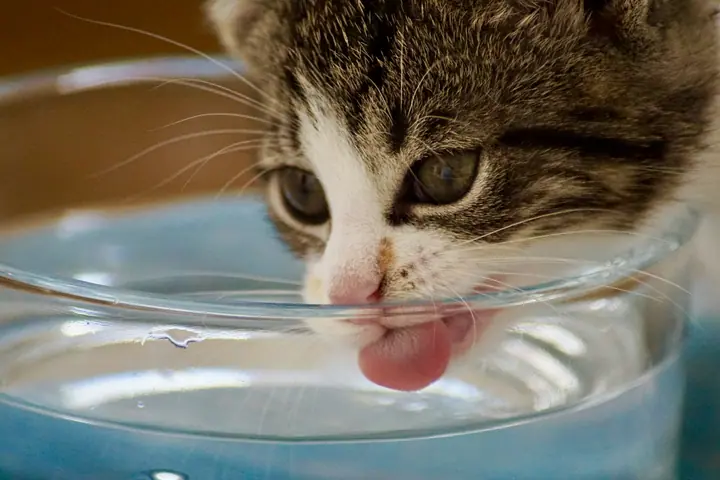
How much water is normal
As a guide, an adult cat needs a total of about 40-60 ml of water per kilogram of body weight a day (roughly 0.6-0.9 fluid ounces per pound), counting both what they drink and the water in their food. Drinking more than about 100 ml per kilogram a day (about 1.5 fl oz per pound) is considered excessive.
| Cat's weight | Needs per day | Too much if over |
|---|---|---|
| 7 lb | 4-6.5 fl oz | about 11 fl oz |
| 9 lb | 5.5-8.5 fl oz | about 14 fl oz |
| 11 lb | 7-10 fl oz | about 17 fl oz (2 cups) |
Rough figures. A cat that eats mostly wet food (about 75-80% water) will drink far less from the bowl than a cat on dry kibble only.
How to measure how much your cat drinks
- Fill the bowl with a known amount, using a measuring cup.
- After 24 hours, measure what's left and subtract.
- Repeat for 2-3 days and take the average. With several cats, try to separate them, or note that the number is for all of them.
Check the litter box too: bigger or more urine clumps than before, or peeing outside the box, are clues that your cat is urinating more.
Why a cat may drink more
Usually not a concern:
- Hot weather or more activity than usual.
- Switching from wet to dry food: without the water in the food, your cat makes up for it by drinking.
- Saltier food than usual (for example, after eating human leftovers).
The most common medical causes:
- Chronic kidney disease: very common in older cats. The kidneys can no longer concentrate urine, so the cat pees more and drinks more to compensate. Weight loss, a poor coat, vomiting or bad breath may come with it.
- Diabetes: the cat drinks and pees a lot, usually eats well or even more, but loses weight. It's more common in overweight neutered males.
- Hyperthyroidism: typical in cats over 8-10. They eat a lot and lose weight, seem restless or more active, and sometimes vomit or have diarrhea.
- Urinary or kidney infections.
- Liver disease or abnormal blood calcium.
- Some medications, such as steroids or diuretics.
When to see the vet
Make an appointment within the next few days if your cat is clearly drinking more than normal for more than two or three days, even if they seem fine. Many of these illnesses progress without other symptoms at first.
Go to the vet right away if, along with drinking a lot, your cat:
- Vomits, won't eat or seems very weak: in a diabetic cat this can be a serious complication (ketoacidosis), and in a cat with kidney disease, a crisis.
- Goes to the litter box again and again and produces nothing or just a few drops: that can be a urinary blockage, an emergency, especially in males.
- May have licked antifreeze or another toxin.
Never take your cat's water away so they pee less: a cat with kidney disease or diabetes needs to drink to avoid dehydration.
What the vet will do
Finding the cause usually takes:
- Bloodwork: kidney values (BUN, creatinine and sometimes SDMA), blood sugar and, in older cats, thyroid hormone (T4).
- A urinalysis: urine concentration, and whether there's sugar, blood or signs of infection. Ask whether you should bring a sample.
- Blood pressure, since high blood pressure is common in cats with kidney or thyroid disease.
In the US, an exam costs about $57-$130 and a blood chemistry panel about $144 on average (Synchrony/CareCredit 2025-2026 cost study). Kidney disease, diabetes and hyperthyroidism usually can't be cured, but they can be managed, and many cats live for years with a good quality of life when diagnosed early.
Frequently asked questions
Is it normal for an older cat to drink more?
It's common, but it isn't "just old age": it usually points to kidney disease, thyroid problems or diabetes. From age 8, it's a good idea to do blood and urine tests at least once a year.
My cat drinks a lot and eats a lot but is losing weight. What could it be?
The most common causes of that combination are hyperthyroidism and diabetes. Both are diagnosed with a simple blood test, so make an appointment with your vet.
How can I get my cat to drink more if they drink too little?
Put several water bowls away from food and the litter box, try a pet water fountain and add wet food to their diet. This helps prevent urinary problems.
Sources
This article is for general information and does not replace diagnosis or treatment by a veterinarian. If you are worried about your pet's health, call your vet clinic.