Cat losing hair: causes, bald spots and when to see the vet
Check these signs first
- Red flag: Go to the vet today if your cat4 signs
- Yellow flag: Make an appointment within the next few days if4 signs
- Green flag: What you can do in the meantime
- Typical cost
- $57-$130
- Reading time
- 6 min
- Sources
- 6
- Updated
Shedding is normal: as long as you can't see bald spots or thin patches, it's most likely just the coat replacing itself. If you find bald spots, broken hair or red, crusty or scaly skin, something is causing it. The most common culprits are fleas and allergies, which make a cat lick too much. It's rarely an emergency, but your vet should see your cat to find the reason.
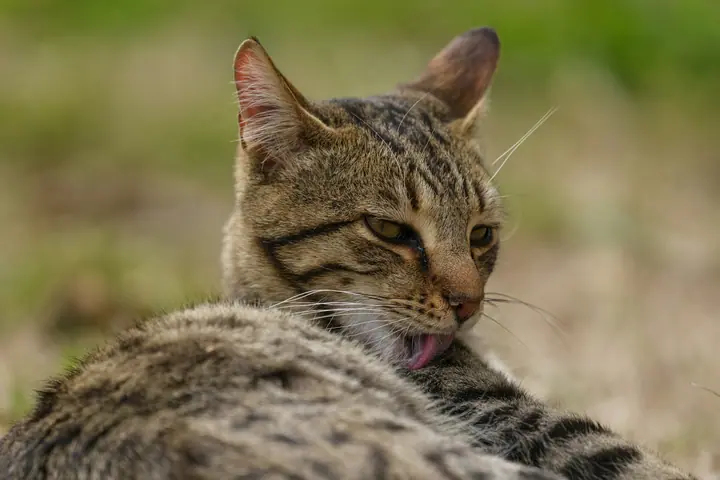
Normal shedding or hair loss?
Hair is replaced all the time, and the old hair falls out. According to the Merck Veterinary Manual, shedding is only abnormal when it leaves bald patches or symmetrical hair loss on both sides of the body. If your cat sheds a lot but the coat looks full and the skin is healthy, it's probably normal turnover.
One thing surprises many owners: often the hair isn't falling out, your cat is pulling it out by licking. Cats spend 30 to 50 percent of their day grooming, so it's easy to miss that they're overdoing it until a bald spot shows up. A clue: when hair has been broken by licking, the hairs left behind feel short and spiky; when it falls out on its own, the hair around the patch still feels soft.
Most common causes
- Fleas and flea allergy. This is the most common cause of symmetrical bald patches: the itch is so intense that the cat licks and chews the hair away.
- Other allergies, to a food or to something in the environment, such as pollen. These cats often lick their back or belly.
- Ringworm. It's a fungal infection (not a worm) that spreads to other pets and to people. It causes roughly circular bald patches, especially on the head, ears or legs, with broken hairs and scaly skin. It's more common in kittens under a year old and in longhaired cats.
- Other parasites and skin infections, bacterial or fungal.
- Pain. Cats lick where it hurts. Cystitis, for example, can leave the lower belly and inner thighs bald.
- Stress. A move, a new pet, the loss of a companion or a change in schedule can trigger compulsive grooming. Stress is only considered once medical causes have been ruled out.
- Less common causes: hormonal problems, a diet low in protein, friction from a poorly fitted collar, or temporary hair loss after a respiratory infection.
What the location tells you
| Where the hair is missing | What's often behind it |
|---|---|
| Base of the tail | Fleas |
| Belly, inner thighs and flanks, on both sides | Overgrooming from allergy, bladder pain or stress |
| Round bald patches on the head, ears or legs, with scaling | Ringworm |
| One spot your cat won't stop licking | Pain in that area |
These are only clues: several causes look alike (ringworm can be mistaken for flea allergy) and only your vet's tests can tell them apart.
When to see the vet
Go to the vet today if your cat:
- Has open sores, raw skin or oozing areas: constant licking can lead to infection.
- Keeps licking the belly or genitals and also goes to the litter box again and again without peeing, or passes only a few drops. This can be a urinary blockage, which is an emergency: read why cats pee outside the litter box.
- Hasn't eaten in 24 hours or is very lethargic: read what to do if your cat isn't eating and is hiding.
- Is trembling, unsteady or having seizures after a flea treatment or after contact with a recently treated dog: this can be permethrin poisoning. You can also call the ASPCA Animal Poison Control Center at (888) 426-4435 (a consultation fee may apply).
Make an appointment within the next few days if:
- You see bald spots or thinning hair, even if your cat doesn't seem itchy.
- The skin is red, crusty, scaly or flaky.
- Your cat is licking, chewing or scratching much more than before.
- The patches are round, or someone at home has developed a skin rash: it may be ringworm.
What you can do in the meantime
- Check for fleas: run a fine comb over the back and the base of the tail, and look for mats.
- Use only flea products made for cats, the ones your vet recommends. A flea-allergic cat needs regular flea control for life. Never use a dog flea product on a cat: permethrin is highly toxic to cats, even through contact with a recently treated dog.
- Don't apply creams or give human medicines unless your vet tells you to.
- Lower stress: introduce changes gradually, offer high perches and play with your cat for 10 to 15 minutes a day.
- Write down when it started, which areas are affected, whether your cat scratches, and any change at home or in the food. It saves your vet time.
- If you suspect ringworm, wear gloves to handle your cat, wash your hands afterward and keep children from picking the cat up until the vet visit.
What the vet will do
Your vet will ask about recent changes and examine the skin and coat. Depending on what they find, they may:
- Comb the coat for fleas and take skin scrapings to look for other parasites.
- Examine hairs under a microscope, which can tell hair broken by licking from hair that fell out.
- Check for fungus with an ultraviolet lamp and a culture, the most reliable test for ringworm. Results can take up to three weeks.
- Order blood and urine tests if a hormonal problem or painful urination is suspected, and a skin biopsy if nothing else gives an answer.
Treatment depends on the cause: flea control, treating the allergy or infection and, while the diagnosis is pending, something to relieve the itch. Ringworm is treated with oral antifungal medication for at least six weeks, topical products and cleaning the home. If stress is the cause, the fix is changes at home and, in serious cases, temporary anti-anxiety medication.
A routine exam costs about $57-$130 in the US, and skin allergy testing averages about $227 (Synchrony/CareCredit 2025-2026 cost study). See how much a vet visit costs.
Frequently asked questions
Is it normal for my cat to shed a lot?
Yes, as long as the coat looks full. Shedding is part of the natural replacement of the coat. It stops being normal when bald spots, thin patches or skin changes appear.
Can stress make a cat lose hair?
The hair doesn't fall out so much as get pulled out: grooming is soothing, and a tense cat can do it compulsively. Other cats soothe themselves by kneading (read why cats knead). Still, fleas, allergies and pain are far more common and have to be ruled out first.
Can I catch ringworm from my cat?
Yes. It spreads through direct contact and through objects like bedding and brushes, and the spores can survive in the home for up to two years. If you or someone in your family develops skin changes, see your doctor.
Will the hair grow back?
In most cases yes, once the cause is treated, but it takes time: it can take a few months. The licking itself can also linger as a habit for a while after the problem is solved.
Sources
- Hair Loss (Alopecia) in Cats (Merck Veterinary Manual)
- Over-grooming in cats (International Cat Care)
- Ringworm in cats (International Cat Care)
- Cats that Lick Too Much (Cornell Feline Health Center)
- Permethrin poisoning (International Cat Care)
- Veterinary Exam and Procedure Costs (CareCredit, Synchrony 2025-2026 cost study)
This article is for general information and does not replace diagnosis or treatment by a veterinarian. If you are worried about your pet's health, call your vet clinic.