Cat not eating and hiding: what it could be and when to worry
Check these signs first
- Red flag: Go to the vet right away if your cat6 signs
- Yellow flag: Make an appointment the same day if3 signs
- Green flag: What you can do in the meantime
- Typical cost
- about $200-$275
- Reading time
- 4 min
- Sources
- 6
- Updated
A cat who stops eating and hides is almost always sick, in pain or very stressed. Unlike dogs, a cat shouldn't go more than 24 hours without eating before seeing a vet: a long fast can trigger a serious liver disease called hepatic lipidosis (fatty liver), especially in overweight cats.
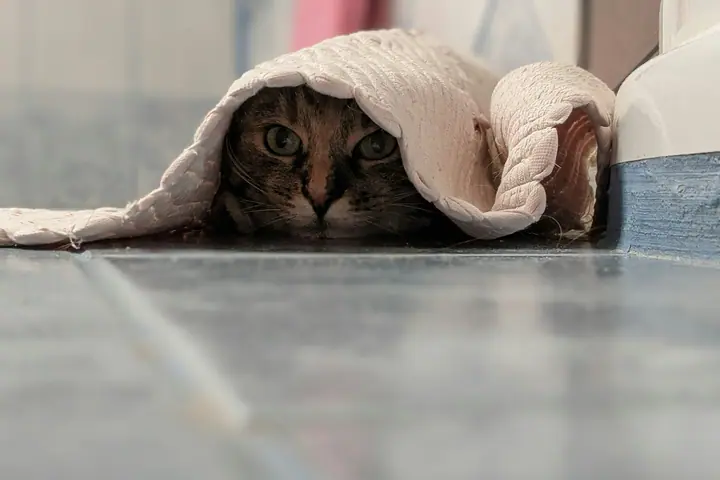
Why cats hide when they feel unwell
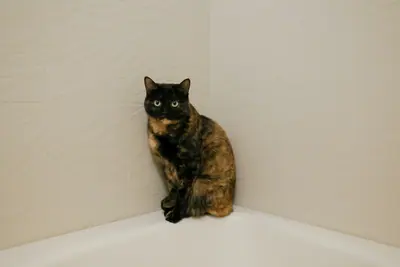
Hiding is instinct: in the wild, a weak or hurting animal hides so it won't become easy prey. So when your cat spends the day under the bed or in a closet and also isn't eating, it's a clear sign something is wrong, even if you don't see other symptoms.
The most common causes
- Stress or changes at home: moving, renovations, guests, a new pet or a baby. These usually pass quickly, and the cat keeps drinking and using the litter box.
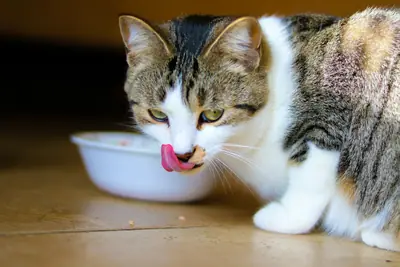
- Dental pain: gingivitis, tooth resorption or broken teeth. Many cats walk up to the bowl, seem to want to eat, then walk away.
- Digestive problems: gastritis, hairballs, swallowed objects (string, hair ties, ribbon). See also why a cat throws up after eating.
- Urinary problems: cystitis or, worse, a blocked urethra.
- Respiratory infections: with a stuffy nose, a cat can't smell food and loses interest. More in cat sneezing a lot.
- Fever from infections or abscesses (common after fights in outdoor cats).
- Chronic illnesses: kidney disease, hyperthyroidism, diabetes or inflammatory bowel disease, very common from age 8-10.
- Poisoning: lilies (every part, even the pollen), dog flea and tick products containing permethrin, acetaminophen (Tylenol) and other human medications.
When it's urgent
Go to the vet right away if your cat:
- Goes to the litter box again and again without peeing, cries while trying or produces only a few drops, especially if male. A urinary blockage can be fatal within 24-48 hours.
- Breathes with an open mouth or with effort.
- Vomits repeatedly, vomits blood or has bloody diarrhea.
- Has yellowish gums or skin (jaundice).
- May have been exposed to lilies, permethrin or human medication.
- Is very weak, cold or not responding normally.
Make an appointment the same day if:
- Your cat has gone 24 hours or more without eating (12 hours for kittens).
- They're a senior, overweight or have a known illness.
- Along with not eating, they have a fever, are drooling or are losing weight.
What you can do in the meantime
If your cat is stable, drinking and peeing normally, and you suspect stress:
- Give them a quiet hideaway with water, a litter box and food nearby, away from noise and other pets.
- Offer warmed wet food (at body temperature it smells stronger) or their favorite food in small amounts.
- Don't force-feed them or offer human food.
- Watch the litter box: note whether they pee and poop normally.
If they haven't eaten within 24 hours, don't wait any longer: see the vet.
What the vet will do
Your vet will check the mouth, temperature, weight and hydration, and feel the belly and bladder. They'll usually recommend bloodwork (kidneys, liver, thyroid, blood sugar) and, depending on the case, a urinalysis, X-rays or an ultrasound. A cat that hasn't eaten for days may need appetite stimulants, fluids or even assisted feeding through a tube for a while. In the US, an exam costs about $57-$130 and a blood chemistry panel about $144 on average (Synchrony/CareCredit 2025-2026 cost study).
Frequently asked questions
How long can a cat go without eating?
An adult cat shouldn't go more than 24 hours without eating anything. After 2-3 days of fasting, the risk of hepatic lipidosis, a serious liver disease, rises sharply. Kittens have even less margin.
My cat isn't eating but is drinking water. Is it serious?
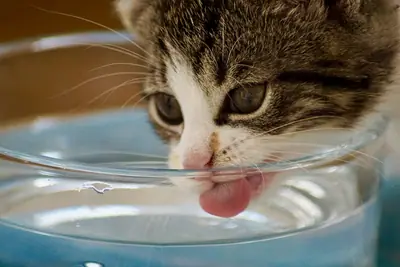
Drinking is a good sign, but it doesn't rule out a problem. If your cat hasn't eaten in 24 hours, a vet should see them. If they're also drinking much more than usual, it may point to kidney disease, diabetes or hyperthyroidism: see cat drinking a lot of water.
Can stress make a cat stop eating?
Yes, changes at home can take away their appetite for a day or two. But don't assume it's stress without ruling out medical causes first, especially if your cat is older or the fast goes on.
Sources
- Hepatic Lipidosis (Fatty Liver Disease) in Cats (Veterinary Partner, VIN)
- Lily poisoning in cats (International Cat Care)
- Permethrin poisoning (International Cat Care)
- Upper Respiratory Infection in Cats (Veterinary Partner, VIN)
- Chronic Kidney Disease (Cornell Feline Health Center)
- Veterinary Exam and Procedure Costs (CareCredit)
This article is for general information and does not replace diagnosis or treatment by a veterinarian. If you are worried about your pet's health, call your vet clinic.