Cat breathing with mouth open: emergency signs, causes and what to do
Check these signs first
- Red flag: Go to the emergency vet right now if your cat5 signs
- Yellow flag: Make an appointment today or tomorrow if your cat breathes normally, but3 signs
- Typical cost
- about $143
- Reading time
- 6 min
- Sources
- 9
- Updated
A cat breathing with an open mouth or panting needs an emergency vet right now. Cats don't pant the way dogs do: if yours is, it's struggling to breathe. Don't wait to see if it passes and don't try to treat it at home: take your cat straight to the nearest emergency vet.
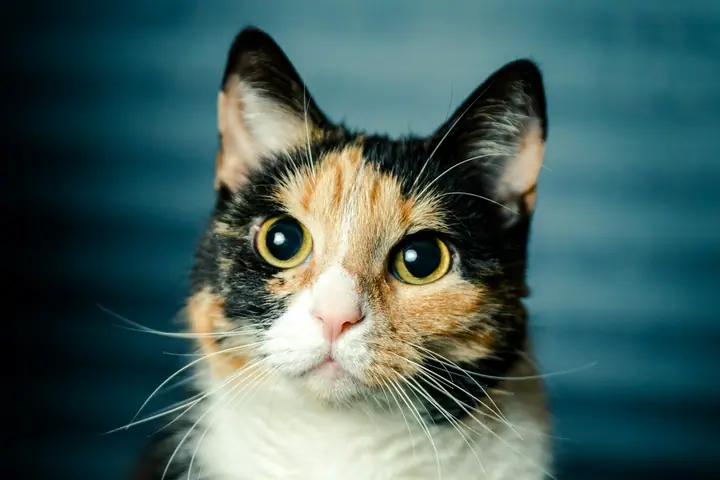
How to tell your cat is struggling to breathe
A cat with trouble breathing may show one or more of these signs:
- Breathing with an open mouth or panting, sometimes noisily.
- Breathing very fast while still or asleep: more than 40 breaths per minute is a warning sign for emergency vets.
- Visible effort: the chest or belly moves in an exaggerated way with each breath.
- An odd posture: sitting upright on the chest or standing with the front legs slightly spread, or lowering the head and stretching the body forward.
- Can't settle: lies down and gets right back up, or won't lie down at all.
- A blue or purple tongue or gums, a sign of low oxygen.
- Coughing or wheezing. Sometimes it looks like your cat is about to throw up or cough up a hairball, but it's actually coughing.
How to count your cat's breaths
If you're not sure whether your cat is breathing too fast, count while they're asleep or resting quietly and not purring (purring throws off the count):
- Watch the chest: each rise and fall is one breath.
- Count for 30 seconds and double it.
- Repeat a couple of times over a while.
A healthy cat breathes 15 to 30 times a minute at rest. If it's consistently above 30, make an appointment as soon as possible. If it's above 40 while your cat is resting or asleep, or you see any other sign on the list, go to the emergency vet: it's the cautious call.
When to see the vet
Go to the emergency vet right now if your cat:
- Breathes with an open mouth or pants.
- Is working hard to breathe or takes more than 40 breaths a minute at rest.
- Has a blue or purple tongue or gums.
- Can't get comfortable or has collapsed.
- Has had a fall, a blow or been hit by a car and is breathing badly.
Make an appointment today or tomorrow if your cat breathes normally, but:
- Coughs often, even if it looks like a hairball.
- Takes consistently more than 30 breaths a minute at rest or asleep.
- Makes noises when breathing, like wheezing, or plays less than usual.
If your cat ever opens their mouth to breathe, it becomes an emergency.
The most common causes
Only a vet can tell which one it is, with an exam and, almost always, an X-ray. These are the usual suspects:
- Feline asthma. It's probably the most common cause of breathing trouble in cats. The airways tighten in response to dust, smoke, perfumes or sprays, and the cat coughs, wheezes or breathes with an open mouth. It has been linked to Siamese and related breeds. An asthma attack is an emergency and can be life-threatening.
- Heart failure. When the heart fails, fluid builds up in or around the lungs and the cat can't get enough air.
- Fluid in the chest (pleural effusion). Fluid collects between the lung and the chest wall because of heart failure, infection or tumors. The lung can't expand fully, so the cat breathes fast and shallow, sometimes with an open mouth.
- Air in the chest. It can follow an injury, and in cats it can also be linked to asthma.
- Trauma. A blow or fall can injure the chest from the inside even when you see no wound.
- Heatstroke. Excessive panting, weakness, drooling, vomiting and diarrhea are warning signs. If you suspect it, move your cat to a cool, drafty spot, gently wet the fur with cool (not very cold) water and get to a vet without waiting.
- Other causes: a foreign object in the nose or windpipe, viral diseases, lung or voice-box tumors, or severe pain even when it has nothing to do with the airways.
What to do on the way to the emergency vet
- Go straight to the nearest emergency vet. According to the emergency specialists AAHA consulted, breathing problems get priority in triage: when you arrive, say you're worried about their breathing.
- Take your cat in a carrier, keep it quiet and handle them as little as you can.
- Keep them warm, unless you suspect heatstroke.
- Don't give any human medication or home remedy. Acetaminophen (Tylenol), for example, is highly toxic to cats.
- If it's safe and doesn't slow you down, film a short video of how they're breathing: it helps the vet.
What the vet will do
The first step is to stabilize your cat: they usually give oxygen, sometimes in an oxygen cage that also lowers stress, and then look for the cause. Oxygen only gives temporary relief: the underlying problem has to be treated.
- They'll listen to the chest and take chest X-rays, and sometimes an ultrasound. In asthma, X-rays often (but not always) show a characteristic pattern.
- If there's fluid in the chest, they'll drain it with a needle, which eases breathing and lets them test the fluid to find the cause.
- For asthma, they use corticosteroids to calm airway inflammation, with or without bronchodilators, by mouth, injection or inhaler. It's a lifelong condition that's kept under control with treatment. Never give these on your own.
In the US, an emergency exam averages about $143, chest X-rays about $158, an ultrasound about $323, and a stay in an emergency hospital about $1,144 (Synchrony/CareCredit 2025-2026 cost study). Costs vary by region and clinic. More in what a vet visit costs.
Frequently asked questions
Is it normal for a cat to pant like a dog?
No. The emergency vets AAHA consulted are clear: a cat should never pant or breathe with an open mouth, and if you see it, it's a medical emergency.
What if my cat only breathed with an open mouth for a moment?
Tell your vet the same day, even if your cat is breathing normally again: say when it happened, how long it lasted and what happened just before. If it happens again, or you see any other sign on the list, go to the emergency vet.
My cat coughs like they have a hairball. Could it be asthma?
It could. Asthma coughing sometimes looks like your cat is about to throw up or cough up a hairball. If your cat coughs often, make an appointment and, if you can, film a video to show the vet. If they also open their mouth to breathe, go to the emergency vet.
Can feline asthma be cured?
It's a lifelong condition: treatment keeps it under control, but it has to continue. Don't stop the medication without talking to your vet first.
Could it be the heat?
Yes: excessive panting is one of the signs of heatstroke, along with weakness, drooling, vomiting and diarrhea. Move your cat to a cool spot with a draft, gently wet the fur with cool water and get to a vet without waiting.
Sources
- Respiratory Distress in Pets (AAHA)
- Dyspnea (Difficulty Breathing) (Cornell Feline Health Center)
- Feline Asthma: What You Need To Know (Cornell Feline Health Center)
- Feline Heat Safety (Cornell Feline Health Center)
- Asthma and chronic bronchitis in cats (International Cat Care)
- Emergencies in Cats (VCA Animal Hospitals)
- Pleural Effusion in Cats (VCA Animal Hospitals)
- Home Breathing Rate Evaluation (VCA Animal Hospitals)
- Veterinary Exam and Procedure Costs (CareCredit)
This article is for general information and does not replace diagnosis or treatment by a veterinarian. If you are worried about your pet's health, call your vet clinic.