Cat sneezing a lot: causes, when to worry and what to do
Check these signs first
- Red flag: Go to the vet right away if your cat5 signs
- Yellow flag: Make an appointment within the next few days if3 signs
- Green flag: What you can do at home
- Typical cost
- $57-$130
- Reading time
- 4 min
- Sources
- 6
- Updated
A cat sneezing now and then is normal: it's how they clear dust or an irritant from the nose. But if your cat sneezes often for several days, especially with nasal discharge, eye discharge or watery eyes, the most likely cause is an upper respiratory infection (often called "cat flu"). Your vet should see them, and right away if your cat is breathing with an open mouth, stops eating or is a kitten.
Most common causes
- Viral upper respiratory infection ("cat flu"). More than 90% of cases are caused by two viruses: feline herpesvirus and feline calicivirus. Both spread very easily between cats.
- Bacterial infections, such as Chlamydia felis (closely linked to conjunctivitis) or Bordetella, or infections that follow a virus.
- Irritants at home: dust, smoke, air fresheners, perfume, cleaning products or a dusty or heavily scented litter.
- Something stuck in the nose, like a blade of grass: it causes sudden, repeated sneezing, sometimes with blood from one nostril.
- Dental problems: an infected root of an upper tooth can affect the nose.
- Nasal polyps or tumors, more common in young cats (polyps) or older cats (tumors), causing discharge or bleeding from one side.
How to tell if it's cat flu
The sneezing often comes with:
- Nasal discharge (clear at first; yellow or green if it gets worse).
- Eye discharge, watery eyes or conjunctivitis.
- Fever, tiredness and loss of appetite: with a stuffy nose, a cat can't smell food and stops eating.
- Mouth or tongue ulcers and drooling (more typical of calicivirus).
When to see the vet
Go to the vet right away if your cat:
- Breathes with an open mouth or with effort.
- Hasn't eaten in 24 hours (12 hours for a kitten). A cat shouldn't go longer without food: read what to do if your cat isn't eating and is hiding.
- Is a kitten, especially an unvaccinated one.
- Is very lethargic or has eyes so swollen they won't open.
- Has a nosebleed.
Make an appointment within the next few days if:
- Your cat sneezes often for more than two or three days, even if they seem fine.
- There's nasal or eye discharge.
- The sneezing keeps coming back, or the discharge always comes from the same nostril.
What you can do at home
- Gently clean the nose and eyes with gauze dampened in warm water, using a separate piece for each eye.
- Use steam: let your cat sit in the bathroom while a hot shower runs (without getting them wet).
- Offer warmed wet food, which smells stronger and can tempt their appetite.
- Make sure they drink.
- Keep them apart from other cats and wash your hands after handling them: it spreads very easily between cats.
- Don't give human medicines or nasal drops without your vet's advice. Acetaminophen (Tylenol), for example, is highly toxic to cats.
What the vet will do
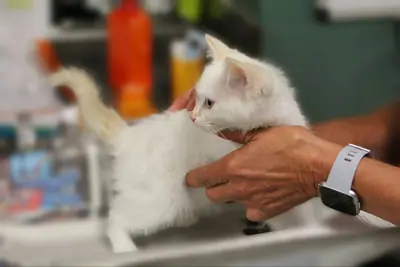
Your vet will examine your cat, take their temperature and look at the mouth, eyes and nose. Cat flu treatment is usually supportive: cleaning, fluids, tempting food and, if there's a bacterial infection, antibiotics or eye drops. If the symptoms don't fit or keep coming back, they may recommend virus tests, X-rays or a look inside the nose under sedation. A routine exam costs about $57-$130 in the US (Synchrony/CareCredit 2025-2026 cost study).
How to prevent it: vaccines
The FVRCP vaccine protects against feline herpesvirus, calicivirus and panleukopenia. It doesn't always prevent infection, but it greatly reduces how sick a cat gets. US guidelines (AAHA/AAFP) list it as a core vaccine for every cat, including indoor-only cats. See the cat vaccination schedule.
Keep in mind that many cats that have had herpesvirus remain carriers: stress (moving, houseguests, a change in routine) can "wake up" the virus and bring back the sneezing and eye discharge.
Frequently asked questions
Can cat flu spread to people or dogs?
The viruses behind it (feline herpesvirus and calicivirus) are specific to cats. What they do is spread very easily between cats: through direct contact, sneeze droplets, shared bowls and litter boxes, and even on people's hands or clothes.
My cat is sneezing but seems fine. Should I wait?
If it's occasional sneezing with no discharge and no loss of appetite, you can watch for a few days and look for irritants at home (dusty litter, air fresheners, smoke). If the sneezing continues or other symptoms appear, make an appointment.
How long does cat flu last?
Symptoms can last from a few days to several weeks. Kittens, seniors and cats with other illnesses may take longer and develop complications, so it's best to have your vet check them.
Sources
- Cat flu: upper respiratory infection (International Cat Care)
- Feline herpesvirus (FHV) (International Cat Care)
- Upper Respiratory Infection in Cats (Veterinary Partner, VIN)
- 2020 AAHA/AAFP Feline Vaccination Guidelines (American Animal Hospital Association)
- Feline Vaccines: Benefits and Risks (Cornell Feline Health Center)
- Veterinary Exam and Procedure Costs (CareCredit)
This article is for general information and does not replace diagnosis or treatment by a veterinarian. If you are worried about your pet's health, call your vet clinic.