Cat throwing up after eating: causes and when to worry
Check these signs first
- Red flag: Go to the vet right away if your cat5 signs
- Yellow flag: Make an appointment within the next few days if4 signs
- Typical cost
- about $200-$275
- Reading time
- 3 min
- Sources
- 5
- Updated
If your cat brings up whole, undigested food a few minutes after eating and then seems fine, they most likely ate too fast. But frequent vomiting isn't normal for a cat, even though many owners assume it is: if your cat vomits more than once a week, or regularly for weeks, it deserves a checkup.
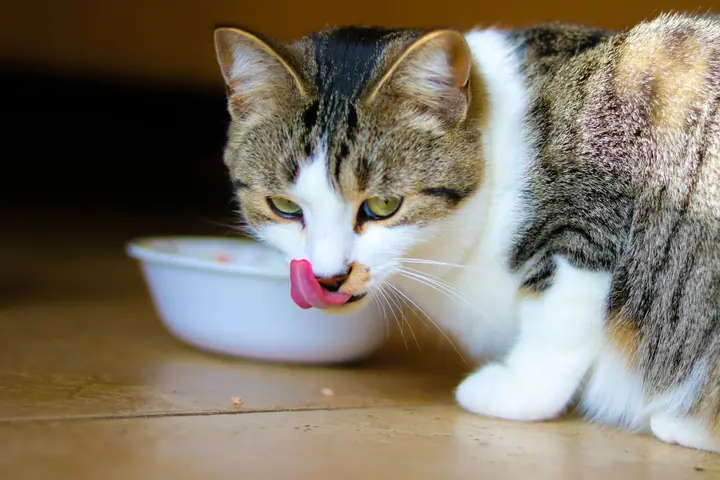
Regurgitating isn't the same as vomiting
Telling them apart helps your vet a lot:
| Regurgitation | Vomiting | |
|---|---|---|
| When | Right after or minutes after eating | Any time |
| Effort | Almost none: the food "just comes out" | Heaving and belly contractions |
| What it looks like | Undigested food, sometimes tube-shaped | Partly digested food, liquid, foam or bile |
| Typical cause | Eating too fast, esophagus problems | Stomach, intestine or other organ problems |
Common causes
- Eating too fast or too much, especially in multi-cat homes where cats compete for food.
- Hairballs: more common in long-haired cats and during shedding season. A hairball every week or two can be normal; more often than that is worth asking your vet about.
- A sudden food change or a food that doesn't agree with them.
- A food allergy or intolerance, which usually causes on-and-off vomiting for weeks or months.
- Inflammatory bowel disease or intestinal lymphoma, especially in middle-aged or older cats with chronic vomiting and weight loss.
- Disease in other organs: kidneys, hyperthyroidism, liver or pancreas.
- Swallowed objects: string, ribbon, hair ties. If you see a string coming out of the mouth or the bottom, don't pull it: go to the vet.
- Toxic plants or substances, such as lilies.
Tips to slow down a fast eater
- Slow-feeder bowls or puzzle feeders.
- Smaller, more frequent meals: 3-4 a day instead of one or two.
- Feed cats separately to reduce competition.
- Spread wet food on a flat plate so it takes longer to eat.
For hairballs, regular brushing helps, especially in spring and fall; ask your vet about hairball diets or products.
When to see the vet
Go to the vet right away if your cat:
- Vomits several times within a few hours or can't keep water down.
- Vomits blood or something that looks like coffee grounds.
- Is lethargic, hiding and not eating (read what to do if your cat isn't eating and is hiding).
- Strains in the litter box without peeing.
- May have swallowed string or a hair tie, or eaten a toxic plant.
Make an appointment within the next few days if:
- Your cat vomits more than once a week, or regularly for weeks, even if they seem fine afterward.
- They're losing weight.
- They drink or pee more than usual.
- They're over 8 and the vomiting is new.
What the vet will do
Your vet will ask how often your cat vomits, what it looks like and how long after meals it happens. After the exam, they may recommend bloodwork (including a thyroid test in older cats), a fecal test, X-rays or an abdominal ultrasound. If a food allergy is suspected, they'll suggest an elimination diet for several weeks. In the US, an exam costs about $57-$130 and a blood chemistry panel about $144 on average (Synchrony/CareCredit 2025-2026 cost study).
Frequently asked questions
Is it normal for a cat to vomit once a week?
It depends on what comes up. According to the Cornell Feline Health Center, a cat bringing up a hairball every week or two can happen without other problems. But if your cat vomits more than once a week, keeps bringing up food, or is also losing weight, lethargic, drinking more or has diarrhea, your vet should see them. Cats don't "just vomit."
What should I do if my cat throws up whole food?
If it happens right after eating and they're fine afterward, try smaller meals or a slow-feeder bowl. If it keeps happening despite these changes, talk to your vet.
Should I take food away after my cat vomits?
You can rest the stomach for a few hours (no more than 12 for an adult), offering water, then small amounts of food. But a cat shouldn't go more than 24 hours without eating: if they won't eat, take them to the vet.
Sources
This article is for general information and does not replace diagnosis or treatment by a veterinarian. If you are worried about your pet's health, call your vet clinic.