Does my dog have a fever?
Check these signs first
- Red flag: Go to the emergency vet right now if5 signs
- Yellow flag: Make an appointment today or tomorrow if4 signs
- Typical cost
- $56-$129
- Reading time
- 4 min
- Sources
- 4
- Updated
A dog's normal temperature is about 100.5°F to 102.5°F (38.1°C to 39.2°C), higher than ours, according to VCA. Anything above 102.5°F after rechecking counts as a fever and is worth a call to your vet. VCA treats a temperature above 104°F (40°C) or below 99°F (37.2°C) as an emergency. You need a thermometer to know for sure: feeling your dog's nose isn't enough. And never give acetaminophen (Tylenol) or ibuprofen (Advil): human fever medicines can poison dogs.

How to take your dog's temperature
The reliable way is a digital thermometer used rectally. According to VCA:
- Get a helper to hold your dog calmly. A treat helps.
- Lay your dog on their side. Standing dogs tend to sit down on the thermometer.
- Lubricate the tip with petroleum jelly.
- Gently insert it until the metal tip is fully inside, and hold it steady.
- If you feel resistance, don't force it.
- Wait for the beep, remove it and wipe it before reading.
If it reads high, let your dog rest and calm down for about 10 minutes and check again: exercise, heat and excitement raise it a little. Ear thermometers are easier but less precise. Avoid glass thermometers: they break easily and contain mercury.
| Rectal temperature | What it means |
|---|---|
| 100.5-102.5°F | Normal for an adult dog |
| 102.6-104°F | Fever: call your vet today |
| Above 104°F (on recheck) | Emergency |
| 106°F or higher | Life-threatening emergency |
| Below 99°F | Too low: emergency |
Ranges from VCA Animal Hospitals. Puppies, dogs about to give birth and senior dogs can run slightly different temperatures.
Signs of fever in dogs
Many dogs with a fever don't show obvious signs. When they do, the most common are:
- Lethargy, sleeping more, or not wanting to move.
- Loss of appetite.
- Faster breathing and heart rate.
- Shivering, stiffness or dehydration.
- Sometimes vomiting.
If your dog is shaking without a fever, see why is my dog shaking or trembling?.
What causes a fever
A fever is the body's defense, not a disease in itself. According to VCA, common causes include:
- Infections from bacteria, viruses, fungi or parasites: skin, wounds, teeth, urinary tract, lungs and more.
- Inflammation, often from an immune-mediated disease.
- A reaction to a vaccine or a medication: usually mild and gone in a day or two.
- Cancer, less often.
- Eating something toxic, including some plants.
Note: a very high temperature from heat or exercise isn't a fever, it's heatstroke, and it's an emergency. See heatstroke in dogs.
When to see the vet
Go to the emergency vet right now if:
- Your dog's temperature is above 104°F on recheck, or 106°F or higher at any time.
- It's below 99°F.
- Your dog has a fever and is very lethargic, struggling to breathe, having seizures or has very pale gums.
- Your dog was in the heat or exercising and won't stop panting (possible heatstroke).
- Your dog may have eaten something toxic.
See more warning signs in when to take your dog to the emergency vet.
Make an appointment today or tomorrow if:
- Your dog has a fever (102.6-104°F) but is otherwise bright.
- Your dog has been lethargic or not eating for more than a day.
- The fever comes with vomiting, diarrhea, coughing or a wound.
- The fever started after a vaccine and hasn't improved in 48 hours.
VCA notes that a high fever lasting more than 48 hours is serious.
While you arrange care
- Offer small amounts of cool water.
- Keep your dog in a cool, well-ventilated spot.
- VCA suggests applying cool, damp cloths to the paws while you arrange care. Don't use ice or ice-cold water.
- Don't give any fever medicine unless your vet prescribes it. Acetaminophen and ibuprofen are toxic to dogs.
What the vet will do
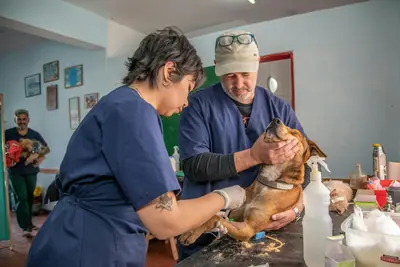
Your vet will do a full exam: skin, mouth, eyes, joints, belly and lymph nodes. According to VCA, the first tests are usually blood work and a urine test; if the cause isn't clear, X-rays or an ultrasound may follow. Treatment depends on the cause. A routine exam runs $56 to $129 and an emergency exam averages about $135 (CareCredit).
Frequently asked questions
If my dog's nose is warm and dry, do they have a fever?
Not necessarily. A dog's nose changes with the weather, sleep and sun. It can be a hint, but the only way to know is to take your dog's temperature with a thermometer.
Can I give my dog Tylenol or ibuprofen for a fever?
No. Both are toxic to dogs, and so are many other human medicines. If your dog has a fever, call your vet.
Is a fever normal after vaccines?
A mild fever and tiredness for a day or two can happen. If it goes above 104°F, doesn't improve in 48 hours, or your dog has facial swelling or trouble breathing, call your vet right away.
What's a normal temperature for a newborn puppy?
Lower than an adult's, rising over the first weeks. The Merck Veterinary Manual gives about 95-99°F in the first week and 99-101°F by week four. Ask your vet what to expect for a very young puppy.
Sources
This article is for general information and does not replace diagnosis or treatment by a veterinarian. If you are worried about your pet's health, call your vet clinic.