Dog ear infection
Check these signs first
- Red flag: Go to the vet today, or to an emergency vet after hours, if your dog4 signs
- Yellow flag: Make an appointment with your vet if your dog5 signs
- Green flag: What you can do in the meantime
- Typical cost
- $56-$129
- Reading time
- 5 min
- Sources
- 6
- Updated
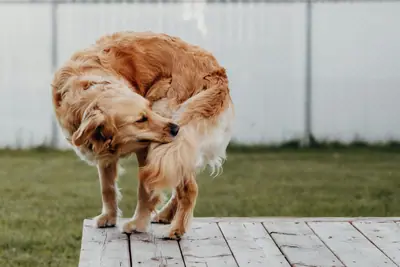
If your dog keeps shaking their head, scratches an ear, has a smelly ear or dark or yellowish discharge, it's most likely an outer ear infection (otitis externa), one of the most common infections in dogs. It's rarely an emergency, but it does need a vet: the right treatment depends on the cause, and the eardrum has to be checked before any drops go in. Go today if your dog tilts their head, loses balance or is in a lot of pain.
Symptoms of a dog ear infection
According to the Merck Veterinary Manual and VCA Animal Hospitals, the usual signs are:
- Head shaking, scratching or rubbing the ear.
- A bad smell from the ear.
- Redness and swelling of the ear canal.
- Discharge: dark wax, yellowish pus or crusts.
- Pain: whining, or not letting you touch the ear.
It can affect one ear or both. In long-standing cases, the skin of the canal thickens and the canal narrows.
What causes it
There's rarely just one cause. Something starts the problem, and other factors keep it going:
- Allergies. VCA says they're involved in up to 43% of cases, and 65% to 80% of dogs with food allergies get ear infections. If your dog also scratches or licks their paws, see why is my dog scratching so much?.
- Ear mites, more common in puppies.
- Foreign bodies, especially foxtails in late spring and summer. They often cause sudden, violent head shaking right after a walk in tall grass.
- Moisture from baths, swimming or a humid climate.
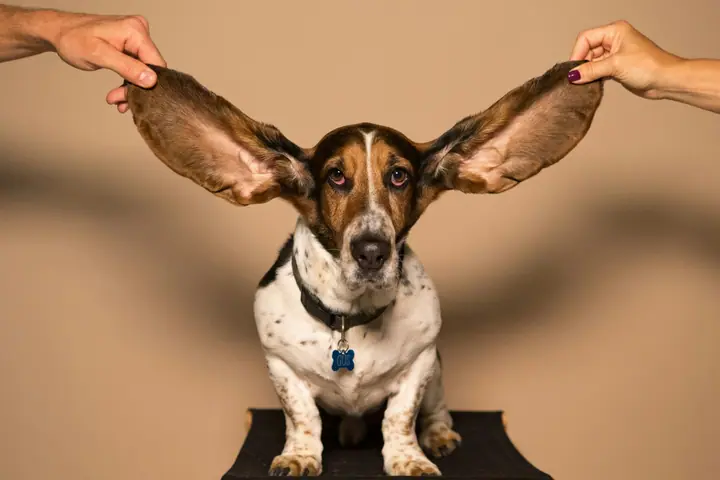
- Ear shape: floppy or hairy ears, as in cocker spaniels, basset hounds and beagles, raise the risk.
- Bacteria and yeast that overgrow once the ear is inflamed.
The Merck Veterinary Manual warns that if every cause isn't treated, the infection tends to come back.
When to see a vet
Go to the vet today, or to an emergency vet after hours, if your dog:
- Tilts their head, loses balance, walks in circles or has eyes that flick side to side.
- Has one side of the face drooping or can't fully close one eye.
- Starts shaking their head violently after a walk through tall grass or a field: it may be a foxtail.
- Is in a lot of pain, won't eat or seems lethargic.
These signs can mean the infection has reached the middle or inner ear, or that something is stuck in the canal.
Make an appointment with your vet if your dog:
- Scratches the ear or shakes their head often.
- Has a smelly ear or dark or yellowish discharge.
- Has a red or swollen ear.
- Has an ear flap that's puffed up like a soft pillow: it may be a blood blister (aural hematoma) from head shaking, which usually needs surgery.
- Has had ear infections before and the signs are back.
What you can do in the meantime
Until the visit, the main goal is not to make it worse:
- Don't put drops in before the vet has looked inside. If the eardrum is ruptured, some medications can cause hearing loss.
- Skip irritating home remedies like vinegar: the Merck Veterinary Manual warns they can make inflammation worse.
- Don't push cotton swabs into the canal: they push debris deeper.
- Keep water out of the ears: no baths or swimming for now.
- Note what you see: which ear, since when, the smell and whether it's happened before. If it has, tell your vet what treatment was used.
What the vet will do
Your vet will ask about symptoms, diet, allergies and past ear problems, then:
- Look into the canal with an otoscope to check for foreign bodies and make sure the eardrum is intact. If it's too painful, your dog may need sedation.
- Take a swab of the discharge and look at it under the microscope (cytology) for bacteria, yeast or mites.
- Clean the ear if needed, since wax and pus stop medication from working.
- Prescribe treatment for the cause, usually ear drops, with oral medication only in severe cases. Finish the full course even if your dog seems better.
- If infections keep coming back, they may suggest a culture, allergy testing or, if the middle ear may be involved, a CT or MRI scan.
If the infection has become chronic and the canal is badly narrowed, surgery is sometimes needed.
How to prevent ear infections
- Dry the ears well after baths and swimming.
- Check the ears regularly for color, smell, moisture and wax.
- Clean only if your vet recommends it, with a vet-approved cleaner. Use cotton balls or gauze at the opening, never swabs down the canal.
- Manage allergies if your dog has them, and stay on a vet-approved parasite plan.
- Check the ears after walks in fields during foxtail season.
Frequently asked questions
Will my dog's ear infection go away on its own?
Usually not. Untreated, it can become chronic, damage the eardrum and spread to the middle ear. The right drops also depend on the cause, which your vet can only tell after looking at the ear and the swab.
Can I use leftover drops from last time?
Better not without asking. The cause may be different this time, and if the eardrum is damaged, some drops can cause deafness.
How long does an ear infection take to clear?
According to the AKC, most uncomplicated ear infections clear within one to two weeks of treatment. The Merck Veterinary Manual says bacterial and yeast infections usually need 2 to 4 weeks, with rechecks, to clear completely, and chronic cases can take months.
Why does my dog keep getting ear infections?
There's almost always an underlying cause that hasn't been fixed, such as allergies, a hormone problem, the shape of the canal or moisture. Treating only the infection won't stop it from coming back.
Sources
- Ear Infections and Otitis Externa in Dogs (Merck Veterinary Manual)
- Otitis Media and Interna in Animals (Merck Veterinary Manual)
- Ear Infections in Dogs (VCA Animal Hospitals)
- Dog Ear Infections: Symptoms, Causes, Treatment, and Prevention (American Kennel Club, August 2026)
- Foxtails and Dogs (UC Davis School of Veterinary Medicine)
- Veterinary Exam and Procedure Costs (CareCredit, Synchrony 2025-2026 cost study)
This article is for general information and does not replace diagnosis or treatment by a veterinarian. If you are worried about your pet's health, call your vet clinic.