How much does dog blood work cost in 2026?
Guide summary
- Typical cost
- $100-$200
- Reading time
- 4 min
- Sources
- 6
- Updated
Blood work for a dog in the US usually costs about $100 to $200 for a standard CBC plus chemistry panel, before the exam fee (WebVet). National averages from the Synchrony/CareCredit 2025-2026 cost study are about $104 for a CBC and about $164 for a chemistry panel (CareCredit). Add $50 to $80 for the office visit. A full senior panel with thyroid and urine testing runs $150 to $300.
Typical costs by test
| Test | Typical cost |
|---|---|
| Complete blood count (CBC) | $60-$90 (national average about $104) |
| Chemistry panel | $120-$180 (national average about $164) |
| CBC + chemistry panel | $100-$200 |
| Pre-anesthetic blood work | $80-$200 |
| Senior wellness panel (with thyroid and urine) | $150-$300 |
| Thyroid (T4) panel | $50-$150 |
| Heartworm test | $35-$75 |
| Exam or office fee | $50-$80 |
Ranges from WebVet (vet-reviewed, July 2026); national averages from the Synchrony/CareCredit 2025-2026 study of veterinary practices. The same panel can differ by $100 or more between clinics. Always ask for an estimate.
What dog blood work checks
Most "blood work" is two tests run on the same sample:
- Complete blood count (CBC): counts red cells, white cells and platelets. Low red cells can mean anemia or bleeding, changes in white cells point to infection or inflammation, and platelet changes can signal clotting problems (Merck Veterinary Manual).
- Chemistry panel: measures substances in the liquid part of the blood to show how the liver and kidneys are working, plus blood sugar, which rises with diabetes. It often includes electrolytes such as sodium and potassium; thyroid hormones may be added.
Specific tests, such as a heartworm test or a thyroid panel, are usually billed separately.
When vets order blood work
- When your dog is sick: vomiting or diarrhea that doesn't settle, drinking a lot more water, weight loss, low energy or pale gums.
- Before anesthesia: for a spay, neuter, dental cleaning or other surgery, to check the kidneys and liver can handle the drugs.
- At wellness visits: VCA recommends regular screening, often combined with the annual visit, and more frequent testing as dogs age (VCA Animal Hospitals).
- To monitor long-term medication: some drugs need periodic blood checks.
If your dog is very lethargic, won't eat or keeps vomiting, don't wait for a routine appointment: see when to take your dog to the emergency vet.
What makes the price go up
- How many values are tested: a short pre-surgery panel costs less than a full CBC and chemistry.
- In-house vs. outside lab: this is the biggest reason for price gaps. In-house machines give results in minutes; outside labs take one to three days (WebVet).
- Add-on tests: thyroid, heartworm or tick-borne disease tests add to the bill.
- Emergency hospitals: blood work at an ER costs more than at your regular vet, and the ER exam fee alone averages about $135 (CareCredit).
- Where you live: big-city clinics charge more.
How to prepare
- Ask whether your dog should fast. Not fasting long enough is the most common mistake before lab tests: a recent meal can leave fat in the sample and affect some results (Costa et al., 2020). Your vet will tell you how many hours and whether water is allowed.
- Bring a list of everything your dog takes, including supplements and parasite preventives.
- Never give human medication to calm your dog or ease pain. Always check with your vet.
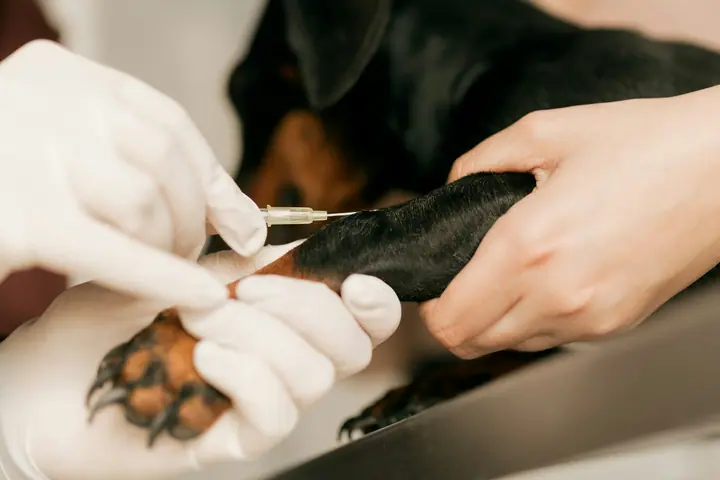
The draw itself is quick: a small patch of fur is clipped on a leg or the neck, and blood is taken with a fine needle. Most dogs don't need sedation.
How to save
- Ask for a written estimate that lists the tests, the lab and whether a recheck visit is included.
- Bundle tests with the annual exam for older dogs, so you pay one office fee.
- Get copies of the results: if you switch clinics or see a specialist, you can avoid repeating recent tests.
- Check your insurance: accident and illness policies usually reimburse diagnostic blood work when your dog is sick, while routine screening is typically covered only by a wellness add-on (MetLife Pet). Read the policy, and see is pet insurance worth it?
More prices: how much does a vet visit cost? and dog X-ray and ultrasound cost.
Frequently asked questions
How long do dog blood test results take?
If your clinic has an in-house analyzer, often minutes or the same day. Samples sent to an outside lab usually take one to three days, and specialty tests can take longer.
Is pre-anesthetic blood work required?
No law requires it, but many clinics recommend or require it before anesthesia, especially for older dogs or dogs with health problems. It costs about $80 to $200 and helps your vet plan a safer anesthetic.
How often should a healthy dog have blood work?
There's no fixed schedule. Many vets suggest testing at the yearly wellness visit and more often for senior dogs. Ask your vet what makes sense for your dog's age and health.
Does drawing blood hurt my dog?
It's a quick needle prick, much like for people. Some dogs are more bothered by being held than by the needle. If your dog is very fearful at the vet, mention it: there are ways to make visits calmer.
Sources
- Dog Bloodwork Cost (WebVet, vet-reviewed, July 2026)
- Veterinary Exam and Procedure Costs (CareCredit, Synchrony 2025-2026 cost study)
- Common Laboratory Tests in Veterinary Medicine (Merck Veterinary Manual)
- Wellness Testing for Dogs (VCA Animal Hospitals)
- Diurnal variations in canine hematological parameters after commercial feed feeding (Costa et al., Semina: Ciências Agrárias, 2020)
- Are Blood Tests Covered by Pet Insurance? (MetLife Pet Insurance)
This article is for general information and does not replace diagnosis or treatment by a veterinarian. If you are worried about your pet's health, call your vet clinic.