When to take your dog to the emergency vet: 12 warning signs
Check these signs first
- Red flag: Go to an emergency vet now if2 signs
- Yellow flag: Make an appointment with your regular vet within a day or two if3 signs
- Typical cost
- $107-$246
- Reading time
- 5 min
- Sources
- 9
- Updated
If your dog is struggling to breathe, having a seizure, retching without vomiting with a swollen belly, bleeding heavily, may have eaten something toxic, or can't stand up, go to an emergency vet now. In these situations every hour counts.
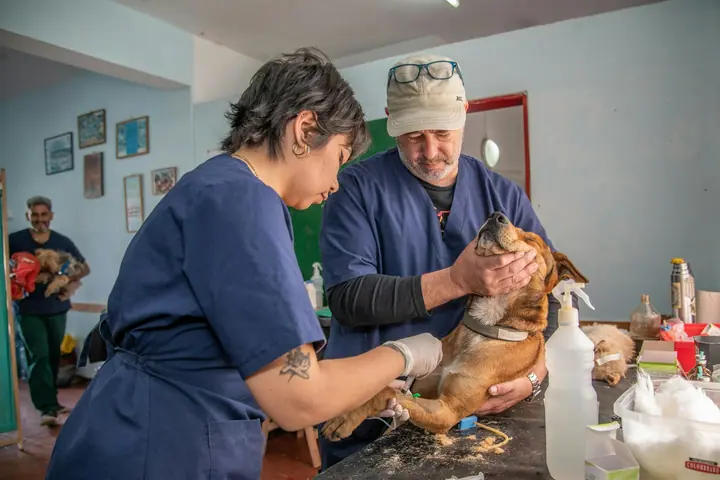
The 12 warning signs
| Sign | Why it's serious |
|---|---|
| 1. Trouble breathing, very fast breathing at rest, or blue or gray gums | Lack of oxygen: heart or lung disease, an airway blockage or heatstroke |
| 2. Retching without bringing anything up, with a swollen belly | Possible bloat (gastric dilatation-volvulus), fatal within hours without surgery |
| 3. Seizures or collapse | Poisoning, epilepsy, low blood sugar or another brain problem |
| 4. Swallowed something toxic | Chocolate, grapes or raisins, xylitol (sugar-free gum), rat poison, human medications, antifreeze, marijuana edibles |
| 5. Bleeding that won't stop | Blood loss and risk of shock |
| 6. Very pale or white gums | Severe anemia, internal bleeding or shock |
| 7. Heatstroke: heavy panting, drooling, trembling, collapse (what to do) | Can damage organs within minutes |
| 8. Hit by a car, a bad fall or a serious dog fight, even if they seem fine | Internal injuries may not show at first |
| 9. Bloody vomit or diarrhea, or vomiting and diarrhea that won't stop | Fast dehydration, parvo, a blockage |
| 10. Can't pee, or strains with nothing coming out | Urinary blockage or kidney failure |
| 11. Severe pain: cries when touched, hunches up, won't move | Pancreatitis, a slipped disc or an abdominal injury |
| 12. In labor with more than 2 hours of strong contractions and no puppy | Dystocia: a risk to the mother and the puppies |
Go now, or call your vet tomorrow?
Go to an emergency vet now if:
- Your dog shows any of the 12 signs in the table, even if it seems to improve on the way.
- You're not sure and can't reach your regular vet: call the emergency hospital, describe the symptoms and follow their advice.
Make an appointment with your regular vet within a day or two if:
- Your dog threw up or had diarrhea once or twice but is drinking, keeping water down and acting normal.
- Your dog limps but puts weight on the leg and doesn't cry when you touch it.
- Your dog ate a little less for a day but has none of the warning signs above.
What to do on the way
- Call ahead if you can. The hospital can get ready and confirm they're taking emergencies right now.
- Don't make your dog vomit with salt water or hydrogen peroxide unless a vet tells you to over the phone. It can be dangerous.
- If it's a poisoning, call a pet poison hotline on the way: the ASPCA Animal Poison Control Center at (888) 426-4435 (a consultation fee may apply) or Pet Poison Helpline at (855) 764-7661 ($89 per incident). Bring the package or what's left of what they ate.
- Keep your dog still and warm, except with heatstroke. Then cool first, transport second: soak them with plenty of cool (not ice-cold) water and keep air moving with a fan or the car's air conditioning. Royal Veterinary College researchers advise against simply draping wet towels over them.
- Move them gently after an injury: use a blanket as a stretcher.
- Keep yourself safe: a dog in pain may bite, even if they're the sweetest dog on earth. Use a makeshift muzzle if needed, unless they're having trouble breathing or vomiting.
What the vet will do at the emergency hospital
Emergency hospitals don't work on a first-come, first-served basis: the most life-threatening problems are treated first, so a dog with a minor cut may wait while a dog with bloat goes straight in. When it's your turn:
- Stabilize first. The vet checks consciousness, airway, breathing and circulation. Stopping bleeding, giving oxygen and pain relief come first, and many dogs get IV fluids to restore circulation.
- Then find the cause. Once your dog is stable, the vet takes a full history and may run bloodwork, a urine test, X-rays or an ultrasound.
- Talk about the plan and the cost. Ask for a written estimate before tests and treatment beyond stabilization, and what the options are if the budget is tight.
- Hand back to your regular vet. Emergency care is meant to get your dog through the crisis. The hospital should send a report to your vet, who usually handles the follow-up.
What an emergency vet visit costs
Most emergency visits start with an exam fee and add tests and treatment from there. US averages from the Synchrony/CareCredit 2025-2026 cost study and Trupanion claims:
| Item | Typical cost |
|---|---|
| Emergency exam | $107-$246 (average $135) |
| Bloodwork (CBC / chemistry panel) | about $104 / $164 |
| X-rays (2-3 views) | about $172 |
| Abdominal ultrasound | about $483 |
| Hospitalization | about $619 at a regular clinic, $1,323 at an emergency hospital |
| Bloat (GDV) surgery | $3,525 (average Trupanion claim) |
| Surgery to remove a swallowed object | $2,964 (average Trupanion claim) |
Every hospital sets its own prices, and big cities cost more. Ask for an estimate whenever you can. Many emergency hospitals accept payment plans or financing.
One serious emergency can easily cost several thousand dollars, and a 2026 Rover survey found that 38% of pet owners couldn't cover an emergency vet bill without going into debt. That's why many families consider pet insurance: we run the numbers in is pet insurance worth it? You'll find more prices in how much a vet visit costs.
Get ready before you need it
- Save in your phone the number of your vet and of the nearest 24-hour emergency animal hospital, plus a pet poison hotline.
- Keep your dog's records handy: vaccines, medications and any conditions.
- Know the most common toxic foods: see foods dogs can't eat.
Worried about the bill? See how much an emergency vet visit costs.
Frequently asked questions
Can I wait until morning if my dog seems off?
If your dog is quiet but breathing normally, drinking, not obviously in pain and has none of the signs in the table, you can usually call your regular vet first thing in the morning. If you're not sure, call an emergency hospital and describe the symptoms: they'll tell you whether to come in.
Does pet insurance cover emergency visits?
Accident-and-illness policies usually cover emergencies, after your deductible and up to your reimbursement percentage, but waiting periods and pre-existing condition exclusions apply. Homeowners or renters insurance doesn't pay for your dog's own care.
Sources
- Gastric Dilatation-Volvulus (American College of Veterinary Surgeons)
- The RVC urges owners of hot dogs to "cool first, transport second" (Royal Veterinary College)
- People Foods to Avoid Feeding Your Pets (ASPCA Animal Poison Control)
- Veterinary Exam and Procedure Costs (CareCredit, Synchrony 2025-2026 cost study)
- Actual claims and vet cost examples (Trupanion)
- The Cost of Dog Parenthood in 2026 (Rover)
- Pet Poison Helpline
- Evaluation and Initial Treatment of Dog and Cat Emergencies (Merck Veterinary Manual)
- How Do Emergency Clinics Work? (VCA Animal Hospitals)
This article is for general information and does not replace diagnosis or treatment by a veterinarian. If you are worried about your pet's health, call your vet clinic.