How much does dog teeth cleaning cost in 2026?
Guide summary
- Typical cost
- $300-$700
- Reading time
- 5 min
- Sources
- 4
- Updated
A professional dental cleaning for a dog in the US costs about $300 to $700 for a routine cleaning under anesthesia at a general practice, and the national average is around $379 (CareCredit; WebVet). Once full-mouth X-rays and extractions are added, the bill often reaches $500 to $1,500 or more. The final price depends on your dog's size, how much dental disease there is and where you live.
Typical costs by item
| Item | Typical cost |
|---|---|
| Routine cleaning under anesthesia (scaling and polishing) | $300-$700 |
| Pre-anesthetic bloodwork | $80-$200 |
| Full-mouth dental X-rays | $100-$300 |
| Extractions | $10-$150 or more per tooth |
| Total with X-rays and extractions | $500-$1,500 or more |
Ranges from WebVet (vet-reviewed, July 2026); national average cleaning cost of $379 from the Synchrony/CareCredit 2025-2026 cost study. Simple extractions cost less than surgical ones on large back teeth. Always ask for a written estimate.
What makes the price go up
- Your dog's size: bigger dogs need more anesthetic and medication.
- How much disease there is: heavy tartar or infected gums mean a longer procedure, and often extractions.
- Dental X-rays: they show what's below the gum line, where 60% of each tooth sits (AAHA).
- Age and health: older dogs or dogs with health problems may need extra tests before anesthesia.
- Where you live and the type of clinic: prices are higher in big cities, and a board-certified veterinary dentist charges more than a general practice.
What's usually included
Before comparing estimates, ask whether they include:
- An exam and bloodwork before anesthesia.
- General anesthesia and monitoring throughout.
- Ultrasonic scaling above and below the gum line.
- Polishing, so plaque sticks less.
- Dental X-rays.
- Extractions, pain medication and antibiotics, if needed.
A very cheap estimate may leave some of these out. Compare like with like.
Why does a dental cleaning need anesthesia?
Because the most important part of the cleaning happens below the gum line, and that can only be done safely with your dog asleep. The American Animal Hospital Association (AAHA) says anesthesia-free dentistry, where a dog's teeth are scraped while they're awake, is not acceptable because of safety, effectiveness and welfare concerns: it only removes the tartar you can see, leaves the disease under the gums untreated and requires restraining the dog (AAHA).
Worrying about anesthesia is normal. To keep it safe, the vet runs blood tests first to check the kidneys and liver, places an IV catheter, puts a breathing tube in and monitors your dog until they wake up. According to AAHA, anesthesia given by a well-trained team is very safe, and the small risk is outweighed by the benefits of treating dental disease.
Signs your dog needs a cleaning
More than 80% of dogs over three years old have active dental disease (VCA Animal Hospitals). Watch for:
- Bad breath.
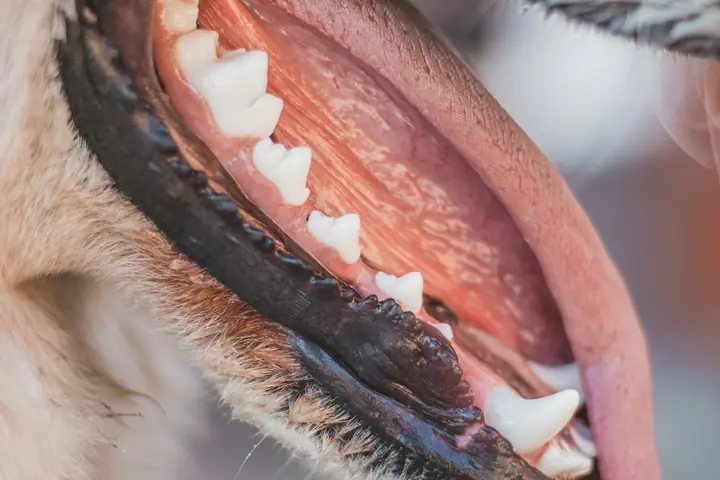
- Tartar (a yellow or brown crust on the teeth) or red, bleeding gums.
- Chewing on one side, dropping food or trouble eating kibble.
- Drooling more than usual or pawing at the mouth.
If you notice any of these, mention them at the next visit. Your vet can look at the mouth in the exam room, but only under anesthesia can they see the real condition of each tooth.
How often does a dog need a cleaning?
There's no fixed schedule: it depends on breed, age and home care. Small and flat-faced breeds build up tartar faster and usually need cleanings more often than large dogs. Your vet should check your dog's mouth at every annual checkup and tell you when a cleaning is due.
How to save (and protect their teeth at home)
- Brush your dog's teeth daily with a dog toothbrush and dog toothpaste. It's the single most effective step (VCA Animal Hospitals). Never use human toothpaste: some contain xylitol, which is toxic to dogs.
- Use dental chews, toys or diets as extras, not instead of brushing. Look for the Veterinary Oral Health Council (VOHC) seal.
- Don't wait until teeth need pulling: a cleaning in time costs far less than a mouth with several extractions.
- Get two or three written estimates and compare what they include.
- Check your coverage: most pet insurance plans don't pay for routine cleanings, but some cover dental disease or injuries, and wellness add-ons may help with cleanings. See is pet insurance worth it?
- Ask about payment options: some clinics offer financing, and veterinary schools may offer lower-cost care.
For other prices, see how much a vet visit costs, and budget the whole year with our dog cost calculator.
Frequently asked questions
How much does a dental cleaning cost for a small dog?
Usually toward the lower end of the $300-$700 range if no teeth need pulling. Keep in mind that small dogs tend to have more dental problems, so extractions are more common.
Is anesthesia dangerous for an older dog?
Age itself isn't a disease. With bloodwork beforehand and careful monitoring, many senior dogs have their teeth cleaned without problems. Your vet will weigh the risks based on your dog's health and explain your options.
Are anesthesia-free cleanings at groomers worth it?
They're not recommended. They make the teeth look cleaner but don't clean below the gum line, where the disease progresses, and they can hurt or frighten your dog.
Does pet insurance cover teeth cleaning?
Routine cleanings usually aren't covered by accident-and-illness policies, because they're preventive care. Some policies cover treatment for dental disease or broken teeth, and some wellness plans contribute to cleanings. Read the policy before you buy.
Sources
This article is for general information and does not replace diagnosis or treatment by a veterinarian. If you are worried about your pet's health, call your vet clinic.