Can cats eat tuna?
Check these signs first
- Reading time
- 4 min
- Sources
- 3
- Updated
Yes, cats can eat a little tuna, but as an occasional treat, not as a regular meal. Veterinary nutritionist Cailin Heinze of Tufts University says occasional tuna treats are probably safe, but she advises against tuna-based food every day because of mercury. And according to the Merck Veterinary Manual, a diet heavy in fish can cause yellow fat disease, a painful condition. Choose chunk light tuna packed in water, drained and with no salt added, and stick to a teaspoon or two.
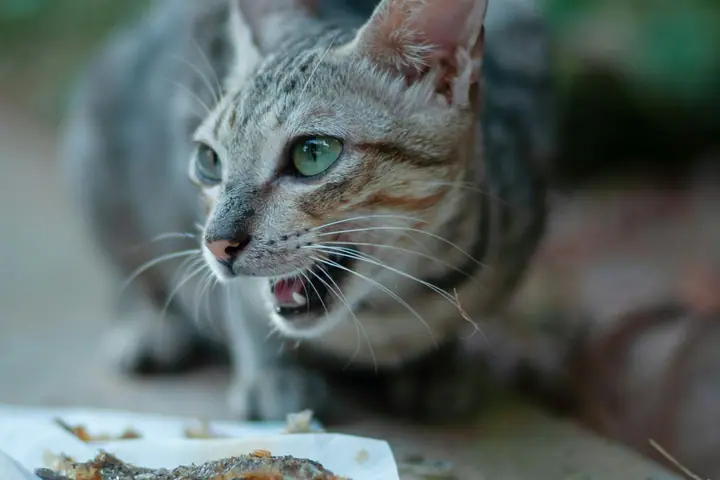
How much tuna can a cat have?
Tufts recommends that treats make up no more than 10% of your cat's daily calories. For an average adult cat, that's a teaspoon or two of tuna at most, and only now and then, not daily.
To work out how much your cat should eat overall, try our pet food calculator.
A simple way to offer it: put the teaspoon of drained tuna on top of your cat's usual food, or use tiny flakes as a reward. If your cat has kidney disease, food allergies or is on a prescription diet, ask your vet before giving any treats.
Why tuna shouldn't be a daily food
- Mercury. Tuna is high on the food chain and carries more mercury than many fish. A cat eating mostly tuna takes in far more mercury per pound of body weight than a person who eats a lot of tuna, according to Tufts. Signs of mercury poisoning (poor coordination, balance problems, trouble walking) look like other illnesses, so it may be missed.
- Yellow fat disease (steatitis). According to the Merck Manual, most known cases have involved animals whose diet was partly or entirely fish or fish byproducts. It's thought to come from too many unsaturated fats combined with too little vitamin E. Affected cats have a fever, become lethargic, stop eating and are painful to the touch along the back or belly.
- It isn't a complete diet. Tuna alone doesn't give a cat everything they need. Their main food should be a complete commercial cat food.
- Some cats get picky. A cat who loves tuna may start refusing their regular food.
Which tuna to choose
| Type | For your cat? |
|---|---|
| Chunk light tuna in water, no salt added, drained | Yes, a small amount now and then |
| Albacore (white) tuna | Better not: Tufts says it has about three times the mercury |
| Tuna in oil | Better not: lots of fat and calories |
| Seasoned or flavored tuna | No: salt, spices or onion |
| Tuna salad or casseroles with mayo, onion or garlic | No |
Onions and garlic damage red blood cells, and cats are more sensitive than dogs, according to the ASPCA. Too much salt is dangerous too.
If your cat loves fish, Tufts suggests choosing foods made with lower-mercury fish such as salmon.
What about tuna cat food?
Complete cat food that contains tuna is formulated to meet a cat's needs, so it isn't the same as tuna from a can. Even so, Tufts suggests not basing your cat's whole diet on tuna foods: rotate flavors or choose lower-mercury fish.
When to see the vet
Go to the vet today if your cat:
- Eats a lot of tuna or fish and is very lethargic, doesn't want to move or won't eat.
- Flinches when you touch the back or belly, or you feel lumps of fat under the skin.
- Walks strangely, loses balance or has tremors.
Remember that a cat shouldn't go more than 24 hours without eating: see cat not eating and hiding.
Frequently asked questions
Can kittens eat tuna?
It's best not to. Kittens need complete food to grow well, and their small bodies are more exposed to mercury. Use kitten treats instead.
Is tuna water or oil good for cats?
Water from tuna packed in water with no salt added isn't dangerous in small amounts, but it adds nothing their food doesn't already give them. Oil adds a lot of fat: skip it.
Can I give my cat raw or fresh tuna?
If you offer it, cook it plain, without salt or seasoning, and keep it small. Ask your vet before feeding raw fish, and remember that a fish-based diet can cause yellow fat disease.
How often can I give my cat tuna?
Only as an occasional treat in a very small amount, not every day: Tufts advises against daily tuna-based food.
Sources
This article is for general information and does not replace diagnosis or treatment by a veterinarian. If you are worried about your pet's health, call your vet clinic.