Can cats drink milk? What the science says (and what to give a kitten)
Guide summary
- Reading time
- 3 min
- Sources
- 3
- Updated
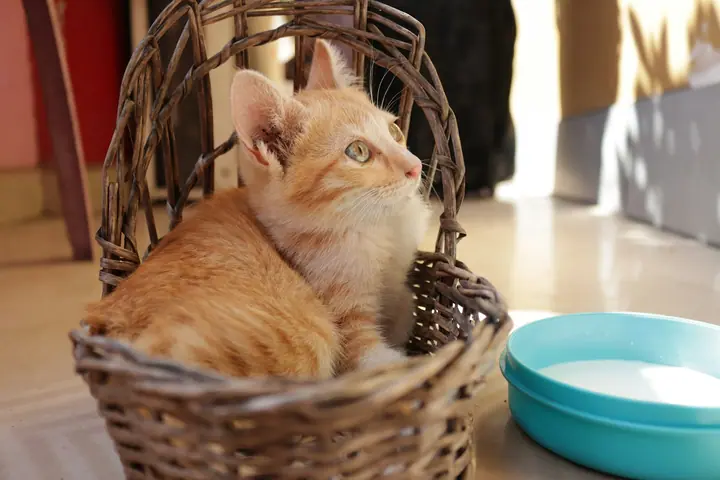
Giving your cat cow's milk isn't a good idea. The cat with a saucer of milk is a classic image, but most adult cats don't digest lactose well, the sugar in milk, and can end up with diarrhea, gas or vomiting. A healthy cat doesn't need milk at all: their food and fresh water give them everything they need.
Why milk upsets their stomach
Digesting lactose takes an enzyme called lactase. Kittens make plenty of it while nursing, but after weaning most of them gradually lose that ability, just like many lactose-intolerant people.
When an adult cat drinks milk, the undigested lactose reaches the large intestine and ferments. The result usually shows up within hours:
- Diarrhea or softer stools.
- Gas and a bloated or tender belly.
- Vomiting, in some cases.
Not every cat reacts the same way: some handle small amounts and others get diarrhea from very little. But since milk adds nothing their food doesn't already provide, it isn't worth the risk.
It's also fattening
Whole milk is high in fat, which is exactly what draws cats to it. For an animal weighing 8-11 pounds, a saucer of milk is a lot of extra calories, and excess weight raises a cat's risk of diabetes, joint problems and other illnesses.
What about lactose-free milk or "cat milk"?
| Type of milk | Can I give it? |
|---|---|
| Whole or 2% cow's milk | Not recommended: often causes diarrhea |
| Cream, condensed milk, milkshakes | No: lots of sugar and fat |
| Lactose-free milk for people | Better tolerated, but unnecessary and adds calories |
| "Cat milk" from the pet store | As an occasional treat in small amounts, counting the calories |
| Kitten milk replacer (from your vet or pet store) | Only for nursing kittens without a mother |
If your cat loves it and you want an occasional treat, the safest option is a milk made for cats, in small amounts and never instead of water.
What about dairy like yogurt or cheese?
A tiny piece of hard cheese or a teaspoon of plain unsweetened yogurt is low in lactose and some cats tolerate it, but they aren't necessary, and cheese is usually salty and fatty. If you use them as treats, keep it occasional and very small. If your cat gets diarrhea afterward, stop.
What milk to give a kitten
An orphaned kitten needs a kitten milk replacer formulated for kittens, sold at vet clinics and pet stores. Never cow's milk: it doesn't give them what they need and can cause diarrhea, which is dangerous in such a small animal.
- Mix it according to the package instructions and serve it warm, from a kitten bottle.
- Very young kittens need to eat every few hours, including at night.
- Take the kitten to a vet as soon as possible: they'll tell you how much and how often to feed based on age and weight, and check that the kitten is healthy.
From about 4 weeks of age, you start introducing wet kitten food, and by about 8 weeks they no longer need milk.
What to do if your cat drank milk
If your cat drank a little and seems fine, there's no harm done: watch for diarrhea or vomiting over the next few hours. If diarrhea lasts more than 24-48 hours, comes with vomiting or your cat seems unwell, read our guide to cat diarrhea or call your vet.
Frequently asked questions
Why do cats like milk so much?
The fat and protein make it very tempting. Liking it doesn't mean it agrees with them: many cats get diarrhea from it.
Can a weaned kitten drink milk?
They don't need it. Once weaned, a kitten should eat kitten food and always have fresh water. Cow's milk can give them diarrhea, just like an adult cat.
How much milk can a cat drink without problems?
It depends on the cat: some tolerate small amounts and others tolerate none. Since it offers no benefit, it's best not to give it and, for a treat, use products made for cats.
Sources
This article is for general information and does not replace diagnosis or treatment by a veterinarian. If you are worried about your pet's health, call your vet clinic.