Can dogs eat apples?
Check these signs first
- Reading time
- 4 min
- Sources
- 4
- Updated
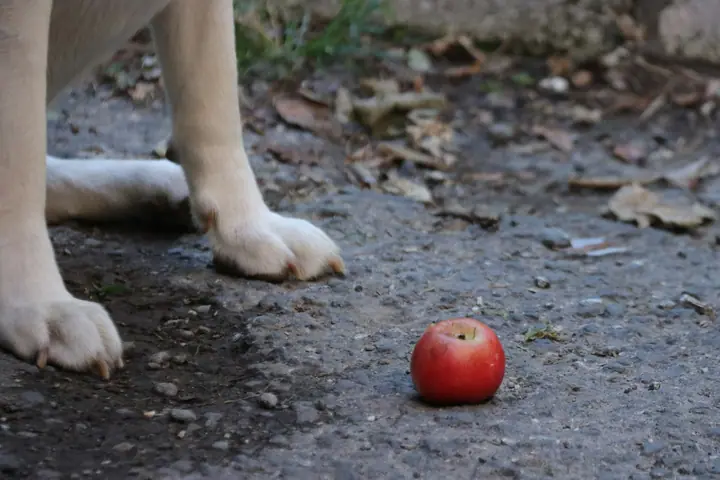
Yes, dogs can eat apples as a treat, in moderation. According to the American Kennel Club, apples are safe and most dogs enjoy them: they have fiber and vitamins and are low in calories. The key is to always remove the seeds, core and stem. The seeds contain a small amount of cyanide, and the tough core can be a choking or blockage hazard. Wash the apple, cut it into small pieces and give just a slice or two.
How much apple can a dog eat?
For most dogs, a slice or two is enough, according to the AKC. Too much can cause a bellyache or diarrhea. A common rule of thumb is that treats should stay under 10% of your dog's daily calories. As a guide:
| Dog size | Occasional amount (guide) |
|---|---|
| Toy (under 10 lb) | 1-2 small pieces |
| Small (10-20 lb) | 1 thin slice |
| Medium (20-55 lb) | 1-2 slices |
| Large (over 55 lb) | 2 slices |
Guide amounts for a healthy dog. If your dog has diabetes, is overweight or is on a special diet, ask your vet first: each apple has about 19 grams of sugar.
Benefits
- Vitamins C and A, potassium and antioxidants.
- Plenty of fiber, especially in the peel, which supports digestion.
- Low in calories, so it's a good treat for dogs watching their weight, in small amounts.
- Chewing apples can help clean teeth a little, but the AKC notes it doesn't replace brushing or professional cleanings.
How to serve it
- Wash the apple well to remove dirt and pesticide residue.
- Remove the core, seeds and stem.
- Cut it into thin slices or cubes sized for your dog.
- If the peel upsets your dog's stomach, peel it: it's easier to digest.
- The first time, give a very small amount and see how your dog does. With puppies, start with one small piece.
A summer idea: frozen apple pieces.
What your dog shouldn't eat
- Seeds, core and stem. According to the ASPCA, the stems, leaves and seeds of the apple tree contain compounds that release cyanide, especially when they're wilted.
- Apple pie and baked goods: lots of sugar and fat, and sometimes nutmeg, which can cause serious problems in large amounts.
- Sweetened applesauce or sugar-free products: xylitol, a sweetener in many "sugar-free" foods, is very toxic to dogs (FDA). Plain, unsweetened applesauce in small amounts is fine.
- Hard cider: it contains alcohol, which is dangerous for dogs.
- Leaves and twigs from an apple tree in your yard.
See the full list in foods dogs can't eat, or look up any food in our can my dog eat…? tool.
When to see the vet
Go to the vet or an emergency hospital right away if your dog:
- Is choking on a piece of apple or having trouble breathing.
- Has brick-red gums, dilated pupils or heavy panting for no reason (signs of poisoning described by the ASPCA).
- Is retching without bringing anything up, has a swollen belly or is very lethargic.
Make an appointment if your dog ate one or more whole cores and, over the next few days, vomits, won't eat or isn't pooping: the AKC advises watching for digestive trouble or a blockage.
A few seeds swallowed by accident aren't usually a problem for a healthy dog, but if you're unsure, call your vet with how much your dog ate and when. You can also call the ASPCA Animal Poison Control Center at (888) 426-4435 (a consultation fee may apply).
Frequently asked questions
Can puppies eat apples?
Yes, according to the AKC, but start with a very small amount and watch for an upset stomach or an allergic reaction. Always without seeds or core, in tiny pieces.
Should I peel the apple first?
The peel holds much of the fiber, so you can leave it on if your dog handles it well. If your dog has a sensitive stomach, peeling makes it easier to digest.
My dog ate an apple core. What should I do?
Don't panic: one core usually has only a few seeds. Watch your dog over the next few days for vomiting, not eating or not pooping, and call your vet if any of those happen or if a small dog ate several cores.
Are apples good training treats?
Yes. In very small pieces, apple is a healthy, low-calorie reward. Just keep track of the daily total.
Sources
This article is for general information and does not replace diagnosis or treatment by a veterinarian. If you are worried about your pet's health, call your vet clinic.