Dog throwing up white foam: causes, what to do and when to see a vet
Check these signs first
- Red flag: Go to the vet right away if your dog5 signs
- Yellow flag: Make an appointment within 24 hours if4 signs
- Green flag: What you can do at home
- Typical cost
- $56-$129
- Reading time
- 4 min
- Sources
- 5
- Updated
If your dog throws up white foam once, then keeps eating, drinking and acting like their usual self, it's usually something minor, such as an empty or irritated stomach. If the vomiting repeats, if your dog retches without bringing anything up, or if they seem weak or listless, take them to the vet.

Why dogs throw up white foam
White foam is usually a mix of saliva, air and stomach fluid. It shows up when a dog vomits on an empty or nearly empty stomach. The most common causes are:
- An empty stomach for too long. Many dogs fed once a day throw up foam or yellow bile early in the morning or right before dinner. Vets call this bilious vomiting syndrome.
- Mild gastritis, from eating grass, garbage, table scraps or a sudden food change.
- Eating or drinking too fast, especially after exercise.
- A cough that ends in a gag. Kennel cough (infectious tracheobronchitis) causes a dry, honking cough that often finishes with a retch and a little white foam. Many owners mistake it for vomiting.
- Stress or anxiety: car rides, moving, fireworks.
- More serious problems: something stuck in the stomach or intestines, pancreatitis, kidney or liver disease, poisoning or, in large dogs, bloat.
When it's an emergency
Go to the vet right away if your dog:
- Retches over and over without bringing anything up, especially with a swollen or tight belly. That's the classic sign of bloat (gastric dilatation-volvulus), most common in large, deep-chested breeds like Great Danes, German shepherds, standard poodles and Dobermans. It is life-threatening.
- Vomits blood or something that looks like coffee grounds.
- May have eaten something toxic (chocolate, grapes, xylitol, medications, rat poison) or an object (socks, toys, bones). Call the ASPCA Animal Poison Control Center at (888) 426-4435 on the way.
- Is very weak, has pale gums or is struggling to breathe.
- Is a puppy that hasn't finished its shots: parvo often starts with vomiting.
Make an appointment within 24 hours if:
- Your dog vomits more than two or three times in a day.
- They can't keep water down.
- They also have diarrhea, a fever or stop eating.
- They're a senior dog or have a chronic condition (diabetes, kidney or liver disease).
For a full list of red flags, see when to take your dog to the emergency vet.
What you can do at home
If it was a single episode and your dog is bright and alert:
- Hold food for a few hours (6 to 12 hours for a healthy adult). Don't fast puppies, toy breeds or diabetic dogs without asking your vet.
- Offer small amounts of water often, rather than letting them gulp a whole bowl.
- Bring food back slowly: small portions of their regular food, or a bland diet your vet recommends, split into several meals.
- Watch them for 24-48 hours. If they eat, drink, potty normally and have their usual energy, they'll most likely recover.
If the foamy vomit happens in the morning on an empty stomach, many dogs do better with two or three smaller meals a day or a small snack at bedtime. Mention it at your next checkup.
Don't give human medicines such as ibuprofen (Advil), acetaminophen (Tylenol), naproxen (Aleve), Pepto-Bismol or omeprazole without your vet's advice. Some are toxic to dogs, and others can hide a serious problem.
What the vet will do
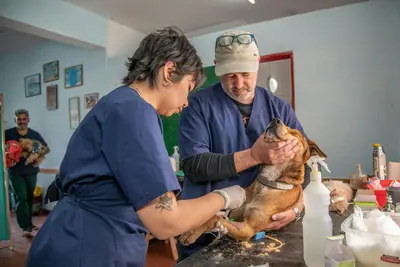
Your vet will ask how many times your dog vomited, what it looked like, what they ate and whether there are other symptoms. They'll do a full exam (temperature, hydration, feeling the belly) and, depending on what they find, may recommend:
- Bloodwork, to check the kidneys, liver, pancreas and hydration.
- X-rays or an abdominal ultrasound, if they suspect a foreign object or a blockage.
- A parvo test, for puppies.
Treatment depends on the cause: from a bland diet and anti-nausea medication to IV fluids or, for blockages and bloat, surgery. As a guide, a routine exam costs about $56-$129, bloodwork about $104-$164 per panel, X-rays about $172 and an ultrasound about $483 on average in the US (Synchrony/CareCredit cost study). Surgery to remove a swallowed object averaged $2,964 in Trupanion's claims data.
Frequently asked questions
Is it normal for my dog to throw up white foam in the morning?
It can be, if it happens occasionally and your dog is fine the rest of the day: it usually means the stomach has been empty for many hours. If it happens several times a week, talk to your vet. Splitting food into more meals often fixes it.
Can throwing up white foam actually be a cough?
Yes. Kennel cough and other airway problems cause a dry cough that ends in a gag with some foam. If your dog coughs (it often sounds like a honk) before "vomiting," tell your vet.
How long should I wait before taking my dog to the vet?
If it was a single episode and your dog is acting normal, you can watch them for 24 hours. If they vomit repeatedly, can't keep water down, seem weak, or try to vomit without success, don't wait.
Sources
This article is for general information and does not replace diagnosis or treatment by a veterinarian. If you are worried about your pet's health, call your vet clinic.