Why is my dog constantly licking their paws?
Check these signs first
- Red flag: Go to the emergency vet right now if3 signs
- Yellow flag: Make an appointment in the next few days if5 signs
- Typical cost
- $56-$129
- Reading time
- 6 min
- Sources
- 7
- Updated
A dog licking their paws for a bit after a walk is normal: it's part of how they groom themselves. But if your dog licks or chews their paws often and intensely, something is bothering them. The most common causes are allergies (environmental or food), fleas or mange, an injury or something stuck between the toes, interdigital cysts, pain, and, once everything else is ruled out, boredom or anxiety. Check their paws today, and if the licking continues, book a vet visit: the sooner it's treated, the less likely it is to get complicated.
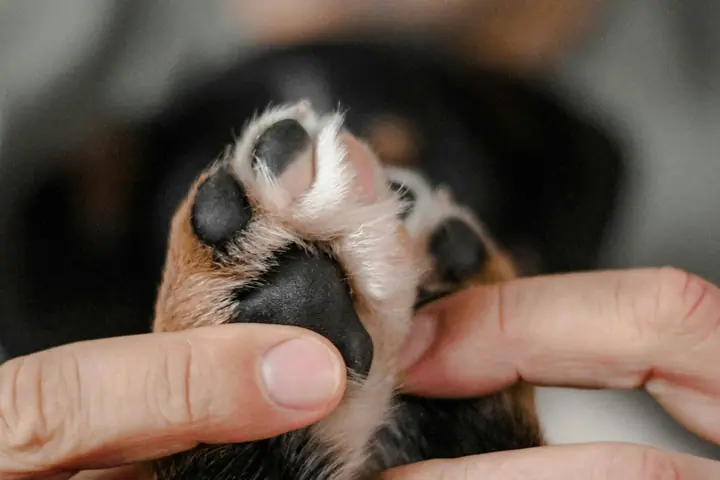
Why dogs lick their paws: the most common causes
- Environmental allergies (atopic dermatitis). According to the MSD Veterinary Manual, the feet, face, ears, front legs and belly are the most commonly affected areas, and licking or chewing the paws is a typical sign. It usually starts between 6 months and 3 years of age and is often seasonal.
- Food allergies. The signs look a lot like environmental allergies but change little from season to season. They're diagnosed with a food trial, not a blood test.
- Fleas and mange. Both can make the paws very itchy. If your dog also scratches their back or the base of the tail, see why your dog is scratching so much.
- Injuries and foreign objects. A cut, a torn nail, a pebble, a thorn or a foxtail stuck between the toes, a bee sting, or a pad burned by hot pavement. Lawn chemicals and de-icing salt in winter can also irritate the paws. If your dog suddenly licks just one paw, think of these first.
- Interdigital cysts (furuncles). Red, painful bumps between the toes that can burst and bleed. According to VCA, the most common cause is allergy-related paw inflammation; they're more common in large dogs with short, coarse coats (Labradors, German Shepherds, pit bull terriers, bulldogs) and in overweight dogs.
- Pain. Arthritis or other foot and leg problems, or even pain elsewhere in the body, can lead a dog to lick a front paw.
- Boredom, stress or anxiety. Noise fears, separation anxiety or compulsive behavior. The American Kennel Club notes this is considered after physical causes have been ruled out.
Why you shouldn't wait it out
The moisture from constant licking encourages bacterial or yeast infections. The infection itches more, the dog licks more, and the problem feeds itself. In dogs who lick the same spot over and over, usually the wrist of a front leg, a lick granuloma can form: a sore that won't heal and that, according to VCA, is often a chronic problem needing long-term treatment. It's more common in medium and large breeds (Labradors, Golden Retrievers, Dobermans, Great Danes, Boxers).
What to check at home
In good light, and if your dog lets you:
- Look between the toes, at the pads, the nails and the top of the foot. Look for cuts, foxtails, pebbles, torn nails, bumps or red areas.
- Compare paws. If it's only one, an injury, something stuck or pain is more likely. If it's several, allergies or something they walked on are more likely.
- Check the smell and color. A bad smell, pus or discolored fur on the paws can mean infection.
- Notice when it happens: after walks, in spring, at night or when they're left alone. That helps your vet a lot.
If you see a foxtail that doesn't come out easily, don't dig for it: see foxtails in dogs.
When to see the vet
Go to the emergency vet right now if:
- The paw is bleeding heavily and won't stop after a few minutes of firm pressure with a clean cloth.
- There's a deep wound or something embedded deep in the paw: don't try to pull it out yourself.
- The pads are burned, blistered or raw (for example, after walking on very hot pavement).
The full list is in when to take your dog to the emergency vet. If you're unsure, call your vet or the nearest 24-hour animal hospital.
Make an appointment in the next few days if:
- They lick or chew their paws often and intensely, even if you can't see anything wrong.
- The paw is red, swollen, smelly or oozing pus, or the fur has changed color.
- You see bumps between the toes or small spots of blood on the floor.
- They're limping or flinch when they step (see dog limping).
- The licking has already caused a sore that won't heal.
What the vet will do
Your vet will ask how long it's been going on, whether it's one paw or several, whether it's seasonal, what your dog eats and whether their flea prevention is up to date. They'll examine the paws and skin and, depending on what they find, may do skin cytology (looking for bacteria or yeast under the microscope), a skin scraping for mites, a culture or, if there's pain, X-rays. If they suspect a food allergy, they'll suggest a food trial, which the MSD Veterinary Manual says can last up to 3 months. Atopic dermatitis can't be cured, but it can be controlled with long-term treatment.
A routine vet visit runs about $56-$129 for a dog in the US (how much a vet visit costs), and CareCredit lists skin allergy testing at about $296 on average.
While you wait for the appointment
- Wipe their paws after walks with water and dry them well, especially between the toes.
- If they're making sores, a recovery cone stops the licking and helps prevent infection.
- Keep flea prevention up to date for every pet in the house.
- If you suspect boredom, add more walks, play, puzzle toys and safe chews.
- Don't use human creams, sprays or medications without talking to your vet.
Frequently asked questions
Is it normal for my dog to lick their paws before bed?
A little grooming is normal. If it goes on for a long time, happens every night, or leaves the paws red or damp, ask your vet.
Why is my dog licking only one paw?
It's usually something local: a cut, a torn nail, a foxtail, a cyst between the toes, or pain in that leg. Check it carefully and, if you can't find the cause and it continues, book a visit.
Can paw licking be caused by anxiety?
Yes, boredom and anxiety can cause compulsive licking, but it should be the last thing considered. Allergies, parasites, injuries and pain need to be ruled out first.
Will it go away on its own?
If it was something minor, like mud or sand after a walk, yes. If it lasts several days, don't wait: the licking itself can lead to an infection that keeps the itch going.
Sources
- Why Does My Dog Lick Their Paws? (American Kennel Club, Chief Veterinarian Dr. Jerry Klein)
- Allergies in Dogs (MSD Veterinary Manual)
- Interdigital Cysts in Dogs (VCA Animal Hospitals)
- Pododermatitis in Dogs (VCA Animal Hospitals)
- Lick Granuloma in Dogs (VCA Animal Hospitals)
- Dog Paw Injuries and How to Help (VCA Animal Hospitals)
- Average Procedural Costs for Veterinary Care (CareCredit, 2025-2026 Synchrony study)
This article is for general information and does not replace diagnosis or treatment by a veterinarian. If you are worried about your pet's health, call your vet clinic.