Foxtails in dogs: signs, what to do and how to prevent them
Check these signs first
- Typical cost
- $56-$129
- Reading time
- 3 min
- Sources
- 4
- Updated
Foxtails are the barbed seed heads of certain wild grasses. Once they dry out in late spring and summer, they cling to fur and work their way into the nose, ears, eyes, mouth, paws or skin, and because of their barbs they only move forward, never back out. If your dog suddenly starts sneezing violently, shaking their head, squinting or licking a paw after a walk through grass, a foxtail is a likely culprit, and your vet should check them the same day.
Why foxtails are dangerous
A foxtail doesn't break down inside the body. It can migrate deep into tissue, causing pain, infection and abscesses, and in rare cases it can reach the lungs, spine or abdomen. Caught early, a foxtail is usually easy to remove; left in place, it can need surgery.
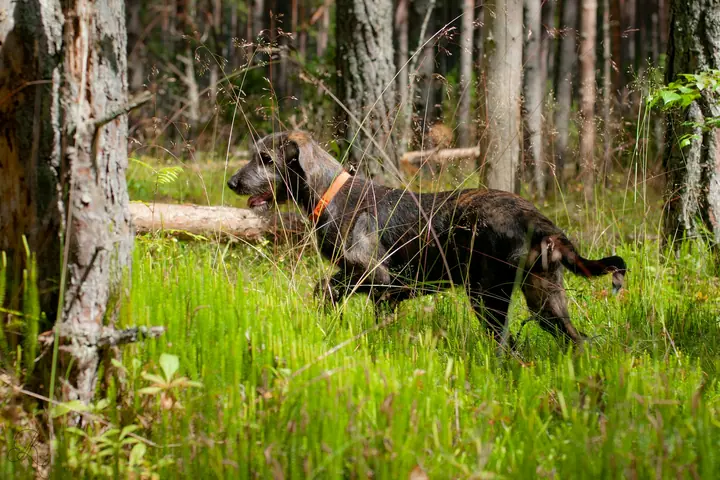
They're most common in the western US, especially California, but similar grass awns grow across the country, in vacant lots, trail edges, fields and unmowed yards.
Signs by location
| Where it is | Signs |
|---|---|
| Nose | Sudden, violent, repeated sneezing; pawing at the nose; discharge or bleeding from one nostril |
| Ear | Head shaking, tilting the head, pawing or scratching at one ear, crying when the ear is touched |
| Eye | Squinting, a watery or red eye, keeping the eye shut, pawing at it |
| Paw or between the toes | Licking one spot, swelling, a lump or a small draining hole, limping |
| Mouth or throat | Gagging, coughing, trouble swallowing, eating grass |
| Skin | A painful lump or a small hole with discharge, often in the armpits or groin |
What to do
- Check your dog after every walk through dry grass: between the toes, in and around the ears, the armpits, groin, under the tail and around the eyes and nose.
- If you see a foxtail on the surface (on the fur or just lodged on the skin) and it's easy to reach, you can remove it with tweezers. Make sure the whole seed head comes out.
- If it's inside the nose, ear or eye, or embedded in the skin, don't try to dig it out: you can push it deeper or leave pieces behind. See your vet.
Go to the vet the same day if your dog:
- Is sneezing violently or has a nosebleed after being in grass.
- Is shaking their head or pawing at an ear constantly.
- Is squinting or holding an eye shut.
- Has a swollen, painful spot or is limping, especially with a lump between the toes.
What the vet will do
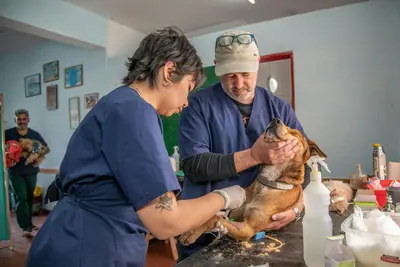
Your vet will look into the ears with an otoscope, examine the eyes and check the paws and skin. Many dogs need sedation so the vet can look deep into the nose or ear canal and pull the foxtail out with special forceps. If it has migrated under the skin, a small surgical procedure may be needed, and an infected area may need antibiotics. A routine exam costs about $56-$129 in the US (Synchrony/CareCredit 2025-2026 cost study); sedation and removal are extra.
How to prevent foxtails
- Avoid overgrown grassy areas in late spring and summer when the grasses dry out.
- Keep your yard mowed and pull foxtail grasses before they go to seed.
- Trim the fur around your dog's paws and ears, especially in long-haired breeds, so seeds have less to grip.
- Check and brush your dog after every walk in dry grass.
- Consider a mesh hood (sold for this purpose) for dogs that run through fields.
Frequently asked questions
Will a foxtail come out on its own?
Rarely. Because of their barbs, foxtails tend to move deeper rather than out. If your dog shows signs, have them checked instead of waiting.
Can a foxtail kill a dog?
It's uncommon, but a foxtail that migrates into the chest, abdomen or spine can cause severe infections. That's why early removal matters.
Are cats affected too?
Yes, outdoor cats can get foxtails in their ears, eyes, nose and paws, with the same signs. Check them the same way.
Sources
This article is for general information and does not replace diagnosis or treatment by a veterinarian. If you are worried about your pet's health, call your vet clinic.