Why does my dog eat grass?
Check these signs first
- Red flag: Go to the vet today, or to an emergency vet after hours, if your dog4 signs
- Yellow flag: Make an appointment with your vet if your dog4 signs
- Green flag: What you can do at home
- Typical cost
- $56-$129
- Reading time
- 4 min
- Sources
- 7
- Updated
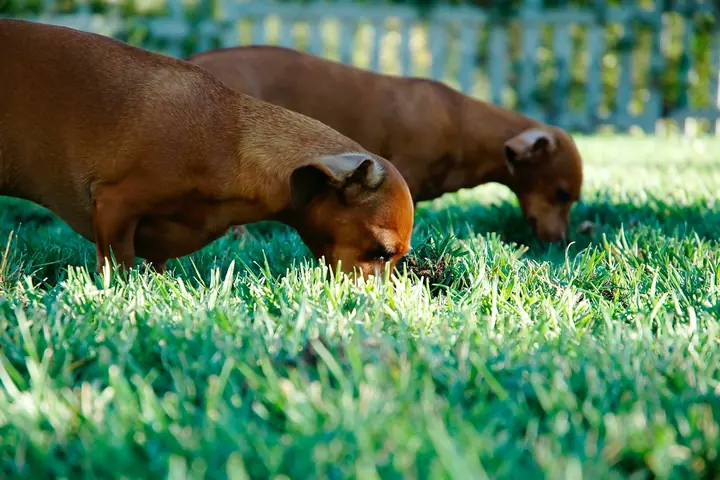
Most dogs eat grass now and then, and in most cases it doesn't mean they're sick. In a UC Davis survey of more than 1,500 dogs, most ate plants regularly and only 8% seemed unwell beforehand. What should worry you is a dog that vomits often, seems lethargic, skips meals or eats grass nonstop, or grass that has been treated with lawn chemicals.
Why dogs eat grass
Nobody knows for sure, but there are several explanations:
- It's normal behavior. Veterinary behaviorist Benjamin Hart of UC Davis surveyed the owners of 1,571 dogs: 68% ate plants daily or weekly, 8% often looked sick beforehand and 22% regularly vomited afterward. His conclusion: plant eating is normal for dogs, and vomiting is incidental rather than the reason they do it.
- Inherited instinct. Hart suggests that wild ancestors of dogs ate plants to help clear intestinal worms. It's a hypothesis, not a proven fact.
- Taste or boredom. Many dogs simply like fresh spring grass. Others graze out of boredom, especially when they spend long hours alone in a yard.
- Fiber. Some experts think grass may add roughage to the diet.
- An upset stomach. Some dogs eat grass when they feel nauseous, and then they may vomit soon after. If your dog throws up yellow on an empty stomach, see why is my dog throwing up yellow?.
In Hart's study, younger dogs ate plants more often than older dogs and were less likely to seem sick before or to vomit after.
The real risks
- Lawn chemicals. Grass recently treated with herbicides or pesticides can be toxic.
- Parasites. Grass where other dogs relieve themselves can carry eggs of intestinal worms such as roundworms and hookworms. Keep up with regular deworming.
- Foxtails. Dry grass seed heads can lodge in the nose, ears, eyes or between the toes and work their way under the skin. Learn the signs in foxtails in dogs.
- Blockage. A large amount of grass can clump together and get stuck.
- Toxic plants. Make sure it's grass your dog is eating, not garden plants or houseplants.
When to see a vet
Go to the vet today, or to an emergency vet after hours, if your dog:
- Ate grass treated with pesticides or weed killer, or a plant that may be toxic.
- Vomits several times in a row, has blood in the vomit or stool, or seems very weak.
- Keeps retching without bringing anything up and has a swollen belly.
- Starts sneezing violently, shakes the head or paws at an eye after a walk in tall grass: a foxtail may be stuck.
If you think your dog ate something poisonous, you can also call the ASPCA Animal Poison Control Center at (888) 426-4435 (open 24/7; a consultation fee may apply).
Make an appointment with your vet if your dog:
- Eats grass compulsively or much more than before.
- Skips meals and only wants grass.
- Often vomits after eating it, or has diarrhea.
- Loses weight, seems less lively or licks their lips a lot.
What you can do at home
If your dog is healthy, eats normally and only nibbles grass now and then, you can let them, with a few precautions:
- Avoid treated lawns and areas that were just sprayed.
- Stay on the deworming plan your vet recommends.
- Check paws, ears and nose after walks through fields or tall grass, especially in late spring and summer.
- Add exercise and play if you think it's boredom: longer walks, sniffing games and puzzle toys.
- Don't change the diet on your own. If you think something is missing, talk to your vet first.
What the vet will do
Your vet will ask how much grass your dog eats, since when, what they normally eat and whether they vomit or have diarrhea, and then examine them. Depending on the findings, they may run a fecal test for parasites, blood work or, if there's a lot of vomiting or a possible blockage, X-rays or an ultrasound. If a foxtail is suspected, they'll check the nose, ears, eyes or the affected area to find and remove it.
Frequently asked questions
Is it bad for my dog to eat grass?
Not if it happens now and then, your dog is healthy and the grass isn't treated. It's a very common behavior. It becomes a problem when it comes with repeated vomiting, diarrhea, weight loss or lethargy.
Do dogs eat grass to make themselves throw up?
Sometimes, but not usually. In Hart's study only 22% of dogs regularly vomited after eating plants, and very few seemed sick beforehand. Most dogs eat grass without vomiting.
Does it mean something is missing from the diet?
Not necessarily: dogs on complete diets eat grass too. If your dog eats a lot, eats it compulsively or skips meals, check with your vet before changing anything.
Should I stop my dog from eating grass?
There's no need if your dog is healthy and the grass is safe. Just avoid treated lawns, foxtails and toxic plants, and watch for other symptoms.
Sources
- Why do dogs and cats eat grass? (Benjamin L. Hart, UC Davis, in dvm360)
- Why Does My Dog Eat Grass? (American Kennel Club, April 2026)
- Why does my dog eat grass? (VCA Animal Hospitals)
- Foxtails and Dogs (UC Davis School of Veterinary Medicine)
- Gastric Dilatation-Volvulus (American College of Veterinary Surgeons)
- ASPCA Animal Poison Control Center
- Veterinary Exam and Procedure Costs (CareCredit, Synchrony 2025-2026 cost study)
This article is for general information and does not replace diagnosis or treatment by a veterinarian. If you are worried about your pet's health, call your vet clinic.