Why does my dog sleep on their back?
Check these signs first
- Red flag: Go to the emergency vet right now if your dog3 signs
- Yellow flag: Make an appointment in the next few days if4 signs
- Typical cost
- $56-$129
- Reading time
- 5 min
- Sources
- 7
- Updated
A dog sleeping on their back, belly in the air and paws flopped over, is normal and not dangerous: it usually means they're cooling off, comfortable and feeling safe at home. They can breathe fine in that position. What's worth a vet visit isn't the position itself but changes in how your dog sleeps: not being able to get comfortable, getting up and lying down over and over, snoring that's new, or labored breathing.
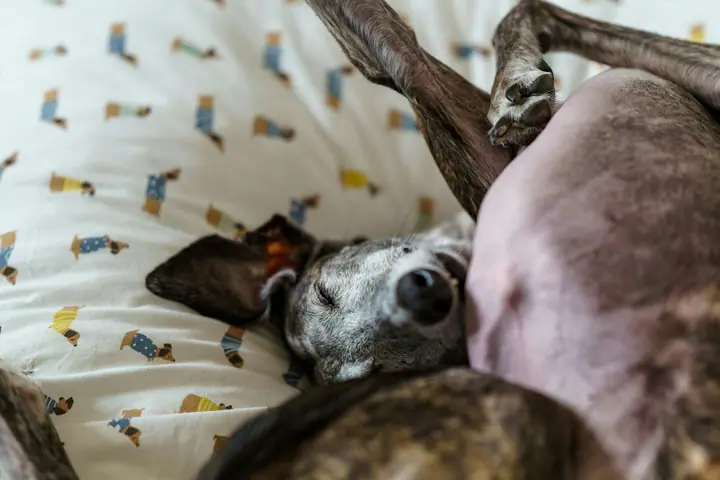
Why dogs sleep belly-up
There's very little research on dog sleeping positions, so these are the explanations vets and dog experts give. Most likely several apply at once.
- To cool off. This is the reason you'll hear most. The belly and paw pads have less fur than the rest of the body, and dogs sweat through their paw pads. With the belly and paws in the air, heat escapes more easily. That's why you'll see it more in summer or on a cool floor.
- Comfort. On their back, dogs can stretch out fully and take pressure off their body. According to the American Kennel Club, some senior dogs, dogs with arthritis, or dogs recovering from an injury or surgery find it comfortable because it takes weight off sore spots.
- Feeling safe. The belly is a vulnerable area. A dog who leaves it exposed while sleeping is relaxed and at ease where they are. AKC Chief Veterinarian Dr. Jerry Klein puts it simply: it means your dog feels comfortable in your home.
- Personality. An estimate cited by Hill's puts it at only 5% to 10% of dogs who regularly sleep this way, and they tend to be easygoing, well-socialized dogs.
A dog who sleeps curled in a ball isn't unusual either: it holds in body heat, especially when it's cold.
Can dogs breathe OK on their back?
Yes. Dogs don't usually choose uncomfortable positions, and according to the AKC, if a position made breathing hard, a dog wouldn't settle into it. The only practical risk is that a very relaxed dog rolls off the couch or bed.
The exception to keep an eye on is flat-faced breeds (bulldogs, pugs, Boxers, Boston Terriers, Pekingese, Shih Tzus). Their head shape makes them prone to breathing problems and to trouble regulating their temperature. With these dogs, pay less attention to the position and more to whether they snore loudly, breathe noisily or get worn out easily.
And if your dog always slept belly-up and stops as they get older, it may just be age: belly-up sleeping can put pressure on the spine, and many senior dogs switch positions.
Sleep signs that aren't normal
Dogs instinctively hide pain, so sleep is a good place to spot it. Watch for a dog who:
- Gets up and lies down again and again, paces, or can't find a comfortable position.
- Groans or grunts when lying down or getting up, or is reluctant to get up once down.
- Pants while resting, with no heat or exercise to explain it (see why a dog pants a lot).
- Sleeps a lot more or a lot less than before.
- Starts snoring after never snoring before, or snores more and more.
- Suddenly changes their usual sleep position and also seems dull, eats less, or hides curled up in a ball.
When to see the vet
Go to the emergency vet right now if your dog:
- Is restless, can't get comfortable, and is also trying to vomit without bringing anything up, drooling a lot, or has a swollen belly: this can be bloat (GDV), a life-threatening emergency, especially in large, deep-chested dogs.
- Is working hard to breathe or breathing very fast while resting.
- Lay down to cool off after time in the heat and won't stop panting, seems very weak, or is wobbly: see heatstroke in dogs.
The full list is in when to take your dog to the emergency vet. If you're unsure, call your vet or the nearest 24-hour animal hospital.
Make an appointment in the next few days if:
- They get up and lie down over and over, groan when lying down, or struggle to get up.
- They've started snoring or snore more than before.
- They're a flat-faced breed and snore loudly, breathe noisily, or get exhausted on short walks.
- They sleep much more or much less than usual for no clear reason.
What the vet will do
Your vet will ask when your dog's sleep changed, whether they snore, whether they're eating and drinking normally, and whether they have trouble moving. They'll do a physical exam to look for pain in the joints, spine or belly and listen to the heart and lungs. Depending on what they find, they may suggest blood work or X-rays. For flat-faced breeds, they'll also check how your dog breathes. A routine visit runs about $56-$129 for a dog in the US: see how much a vet visit costs.
Helping your dog sleep well
- Let them sleep however they like. If they're comfortable and breathing easily, there's no need to move them.
- Give them a bed big enough to stretch out; an orthopedic mattress can help senior dogs.
- In hot weather, make sure they have a cool, shady spot and fresh water.
- If they sleep on the couch or your bed, consider a ramp or step for small or older dogs in case they roll off.
- Watch them sleep now and then. You'll learn what's normal for your dog and notice changes sooner.
Frequently asked questions
Does sleeping on their back mean my dog is happy?
It usually means they're relaxed and feel safe, but there's no research proving it. And a dog who doesn't sleep this way isn't unhappy: most dogs don't.
Why does my dog sleep on their back with their paws curled up?
It's the same position: front paws folded over the chest and belly exposed. It lets them release heat from the areas with less fur, and they're comfortable.
Should I wake my dog or roll them over?
No. If they're breathing calmly, leave them be. It only needs attention if they're working to breathe, groaning, or can't settle.
Why did my dog stop sleeping on their back?
It could be cold weather, a new bed or age. If they also struggle to lie down or get up, seem less lively, or groan, ask your vet whether they could be in pain.
Sources
- Why Does My Dog Sleep on Their Back? (American Kennel Club, with Chief Veterinarian Dr. Jerry Klein)
- Dog Sleeping Positions and What They Mean (PetMD, reviewed by Hannah Hart, DVM)
- Reasons for Your Dog's Odd Sleep Behaviors (Hill's Pet Nutrition)
- Dog Sleeping Positions Decoded (VCA Animal Hospitals)
- How Do I Know if My Dog Is in Pain? (VCA Animal Hospitals)
- Is Snoring Normal for Pets? (VCA Animal Hospitals)
- Disorders of the Stomach and Intestines in Dogs: bloat (MSD Veterinary Manual)
This article is for general information and does not replace diagnosis or treatment by a veterinarian. If you are worried about your pet's health, call your vet clinic.