Puppy vaccination schedule: which shots and when
Guide summary
- Typical cost
- $180-$300
- Reading time
- 4 min
- Sources
- 5
- Updated
A puppy needs a series of shots from 6-8 weeks until at least 16 weeks of age, plus a rabies vaccine, which most states require by law (usually by 3-6 months of age). Under the American Animal Hospital Association (AAHA) guidelines, the core vaccines are DAPP (distemper, adenovirus, parvovirus and parainfluenza), rabies and, since a 2024 update, leptospirosis.
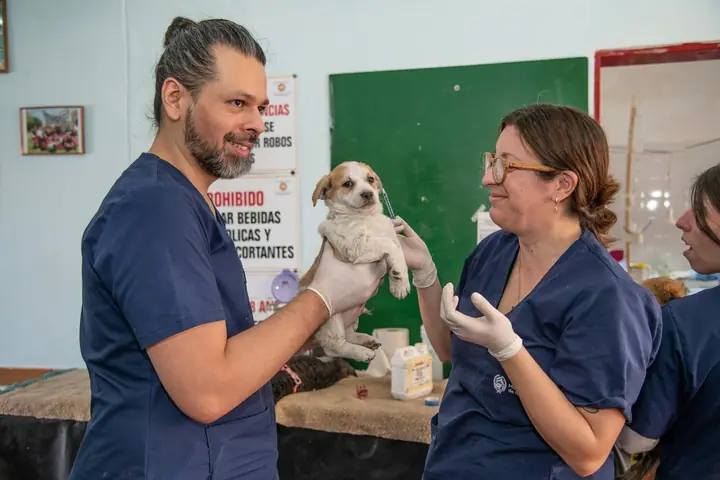
Why puppies need several doses
In their first weeks, puppies are protected by antibodies from their mother. Those antibodies fade gradually, but while they're present they can "cancel out" a vaccine. Since nobody knows exactly when they disappear in each puppy, vets give several doses every 2-4 weeks until 16 weeks or later, to make sure one of them works.
A typical schedule
Every clinic adapts the schedule to the vaccines it uses, your area and your puppy. This is a common plan based on AAHA guidelines:
| Age | Vaccine | Protects against |
|---|---|---|
| 6-8 weeks | DAPP, dose 1 | Distemper, adenovirus (hepatitis), parvovirus, parainfluenza |
| 10-12 weeks | DAPP, dose 2; leptospirosis, dose 1 (from 12 weeks) | The same, plus leptospirosis |
| 14-16 weeks | DAPP, dose 3; leptospirosis, dose 2 (2-4 weeks after dose 1) | The same |
| 12-16 weeks (per state law) | Rabies | Rabies (required in most states) |
| 16 weeks or older | Final DAPP dose if needed | The last puppy dose must be at 16 weeks or later |
| Within a year of the series | DAPP and rabies boosters | Completes first-year protection |
| Every year after | Checkup, leptospirosis (yearly) | DAPP usually every 3 years; rabies every 1 or 3 years depending on the vaccine and your state |
AAHA guidelines call for at least three DAPP doses, starting at 6-8 weeks, 2-4 weeks apart, with the last dose at 16 weeks or older.
Optional (non-core) vaccines
Your vet will recommend these based on lifestyle and where you live:
- Bordetella (kennel cough): often required by boarding kennels, daycare, groomers and training classes.
- Canine influenza: for dogs that board, attend daycare or shows, or live where outbreaks have occurred.
- Lyme disease: in areas where Lyme-carrying ticks are common, alongside tick prevention (ticks on dogs).
When can my puppy go outside?
The old advice was to wait until all vaccines were done. Today many vets recommend a balance: the window between about 3 and 14 weeks is key for socialization, so your puppy should meet people, sounds and healthy, vaccinated dogs in controlled settings (like a puppy class that requires vaccines), while avoiding dog parks, pet store floors and places with lots of unknown dogs until your vet gives the green light.
How much puppy vaccines cost
| Item | Typical US cost |
|---|---|
| DAPP (DHPP) vaccine, per dose | about $42 |
| Rabies vaccine (1-year) | about $35 |
| Microchip | about $48 |
| Total puppy vaccines, first year | $180-$300 |
Per-dose averages from the Synchrony/CareCredit 2025-2026 cost study; first-year total from Rover's 2026 cost survey. Many clinics charge an exam fee on top: ask beforehand. Shelters, humane societies and some counties run low-cost vaccine and rabies clinics.
Before each vaccine
- Your puppy should be healthy: if they have diarrhea, a fever or seem unwell, the shot is postponed.
- Puppies are usually dewormed at the same visits. See how often to deworm a dog.
- Keep your vaccination records and rabies certificate: you'll need them for a dog license, boarding and travel.
Do you also have a cat? See the cat vaccination schedule.
Frequently asked questions
Is the rabies vaccine required by law?
Most states require rabies vaccination for dogs, usually by 3-6 months of age, and about ten states leave it to local governments, many of which require it too. Proof of rabies vaccination is usually needed to license your dog. We explain it in pet laws in the US.
What happens if a puppy shot is late?
A few days late usually isn't a problem. If several weeks pass, your vet may recommend repeating a dose. In the meantime, be extra careful about contact with other dogs.
Is it normal for my puppy to be tired after shots?
Yes, it's common for a puppy to be a bit tired or sore at the injection site for 24-48 hours. If you notice facial swelling, vomiting, trouble breathing or severe weakness, call your vet right away.
Sources
- 2022 AAHA Canine Vaccination Guidelines (American Animal Hospital Association)
- Update: AAHA guidelines designate Leptospirosis vaccine as core (AAHA, 2025)
- Table of Rabies Vaccination Laws (Animal Legal & Historical Center, Michigan State University)
- Veterinary Exam and Procedure Costs (CareCredit, Synchrony 2025-2026 cost study)
- The Cost of Dog Parenthood in 2026 (Rover)
This article is for general information and does not replace diagnosis or treatment by a veterinarian. If you are worried about your pet's health, call your vet clinic.